

What are the performance requirements of Sm2Co17 magnet in different applications?
Aug 06, 2025
As a supplier of Sm2Co17 magnets, I've witnessed firsthand the diverse and demanding performance requirements these magnets face across various applications. Sm2Co17 magnets, also known as samarium cobalt magnets, are part of the rare - earth magnet family, offering high energy density, excellent temperature stability, and strong corrosion resistance. In this blog, I'll delve into the performance requirements of Sm2Co17 magnets in different applications.
High - Temperature Applications
One of the most significant advantages of Sm2Co17 magnets is their ability to maintain magnetic properties at high temperatures. In applications such as aerospace engines, industrial furnaces, and high - power motors, temperatures can reach several hundred degrees Celsius. For instance, in aerospace engines, the magnets are used in sensors and actuators that need to function reliably in extremely hot environments.
The performance requirements in high - temperature applications are mainly centered around thermal stability. The coercivity (Hc) of Sm2Co17 magnets should remain relatively stable at elevated temperatures. Coercivity is the measure of the magnet's resistance to demagnetization. A decrease in coercivity can lead to a loss of magnetic strength, which can be catastrophic in critical applications like aerospace.
Another important parameter is the Curie temperature (Tc). The Curie temperature is the temperature at which a magnet loses its ferromagnetic properties. Sm2Co17 magnets typically have a high Curie temperature, usually above 700°C, which makes them suitable for high - temperature applications. However, to ensure long - term performance, the operating temperature should be well below the Curie temperature.
Precision Instrumentation
In precision instrumentation, such as magnetic resonance imaging (MRI) machines, mass spectrometers, and high - precision sensors, Sm2Co17 magnets are used to generate stable and precise magnetic fields. The performance requirements in these applications are focused on uniformity and accuracy.
The magnetic field uniformity is crucial in MRI machines. A non - uniform magnetic field can lead to image artifacts and inaccurate diagnoses. Sm2Co17 magnets need to be manufactured with high precision to ensure that the magnetic field they generate is as uniform as possible. This requires strict control over the manufacturing process, including powder preparation, pressing, sintering, and magnetization.
Accuracy is also essential in precision sensors. For example, in a magnetic sensor used to measure the position or speed of an object, the magnet's magnetic field strength and direction need to be precisely calibrated. Any deviation can result in measurement errors. As a supplier, we use advanced testing equipment to ensure that our Sm2Co17 magnets meet the strict accuracy requirements of precision instrumentation.
Small - Sized and High - Power Applications
With the trend towards miniaturization in many industries, there is a growing demand for small - sized yet high - power magnets. In applications such as micro - motors, earphones, and small actuators, Sm2Co17 magnets offer a great solution.
In micro - motors, the magnet needs to provide a strong magnetic field in a limited space. The energy product (BH)max is a key performance indicator in these applications. The energy product represents the maximum amount of magnetic energy that a magnet can store. A higher energy product allows for a smaller magnet to achieve the same magnetic performance as a larger magnet with a lower energy product.
For earphones, the magnet's ability to produce high - quality sound is related to its magnetic field strength and stability. Sm2Co17 magnets can provide a strong and stable magnetic field, which helps to drive the diaphragm of the earphone more effectively, resulting in better sound quality.
Corrosive Environments
In some applications, such as marine equipment, chemical processing plants, and outdoor sensors, Sm2Co17 magnets are exposed to corrosive environments. The performance requirements in these applications are mainly related to corrosion resistance.
Although Sm2Co17 magnets have better corrosion resistance compared to some other types of magnets, they still need protection in harsh environments. We offer various surface treatments for our Sm2Co17 magnets, such as nickel plating, epoxy coating, and Parylene coating. These coatings can effectively prevent the magnet from being corroded by moisture, chemicals, and other corrosive agents.
Special - Shaped Magnet Applications
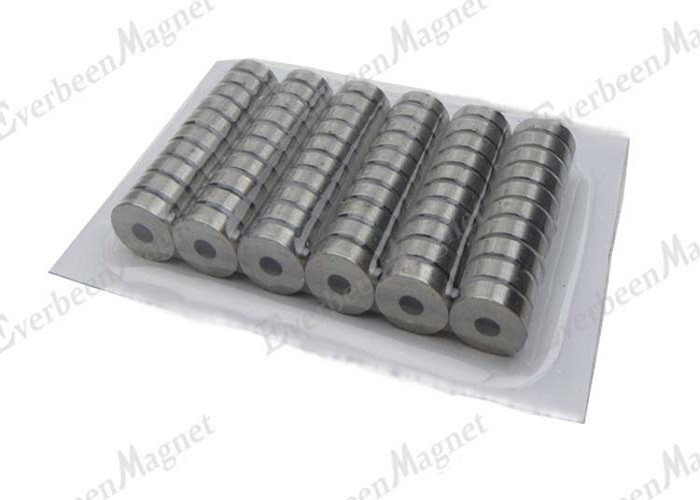
In addition to the standard shapes like blocks and discs, there are also applications that require special - shaped Sm2Co17 magnets, such as Smco Ring Magnet and Smco Rod Magnets. These special - shaped magnets are used in applications like magnetic couplings, magnetic bearings, and some custom - designed devices.
The performance requirements for special - shaped magnets are not only related to the magnetic properties but also to the mechanical properties. For example, in a magnetic coupling, the ring - shaped magnet needs to have sufficient mechanical strength to withstand the torque and stress during operation. The manufacturing process for special - shaped magnets is more complex, and we need to use advanced machining techniques to ensure that the magnets meet the required dimensions and tolerances.
Conclusion
In conclusion, the performance requirements of Sm2Co17 magnets vary significantly across different applications. Whether it's high - temperature stability, precision in instrumentation, high power in small sizes, corrosion resistance, or special - shaped designs, our company is committed to providing high - quality Sm2Co17 magnets that meet these diverse requirements.

If you are in need of Sm2Co17 magnets for your specific application, we invite you to contact us for a detailed discussion. Our team of experts can help you select the most suitable magnet and provide customized solutions. We look forward to working with you to meet your magnet needs.
References
- Handbook of Magnetic Materials, edited by Klaus H. J. Buschow.
- Rare - Earth Permanent Magnets: Fundamentals and Applications by J. M. D. Coey.
- Journal of Applied Physics, various issues related to rare - earth magnet research.