Smco Magnet

 
Why Choose Us?
 
01/

Expertise and Experience
20+ years of experience in the magnet industry, all our sales have 12+ years expertise and knowledge in various types of permanent magnets.

02/

Customization
Most of permanent magnets are customized according to drawing and requests.Be flexible in accommodating customer needs, whether it involves order adjustments, additional information, or other special requests.

03/

Diverse Product Range
Besides Neodymium magnet, we also provide Alnico magnet, Samarium Cobalt (SmCo) magnet, Ferrite(ceramic) magnet, Flexible magnet(Rubber magnet) and Magnetic Products.

04/

Quality Assurance
All magnets are under our strict quality control. We assure you what we offer is superior and quality products. From the beginning of the production to the inspection of finished goods, we pay attention to every detail and try our best to avoid any mistakes carefully.

05/

Effective Communication
Provide responsive and effective communication during the purchasing process, addressing any inquiries promptly and offering support to ensure a smooth transaction.

06/

Timely Delivery
15-30 days according to magnet order information.We promise timely delivery to ensure you receive the goods on time.


What Is SmCo Magnet


A samarium–cobalt (SmCo) magnet, a type of rare-earth magnet, is a strong permanent magnet made of two basic elements: samarium and cobalt. Samarium–cobalt magnets are generally ranked similarly in strength to neodymium magnets, but have higher temperature ratings and higher coercivity. Samarium cobalt magnets are rare earth magnets made from samarium, cobalt, and other metallic rare earth materials. They have a high magnetic energy product, a very low-temperature coefficient, and a maximum operating temperature of 350°C. Although their maximum magnetic energy product, coercivity, temperature stability, and chemical stability exceed those of the NdFeB magnets when the working temperature is above 180℃, the surrounding temperature still has an important influence on their performance.


Smco Magnets Features


Grades & Materials: We carry a large inventory of licensed, samarium cobalt magnet materials in standard and premium grades for reduced production and lead times. We offer sintered SmCo magnets in grades that range from 16 MGOe to 33 MGOe.


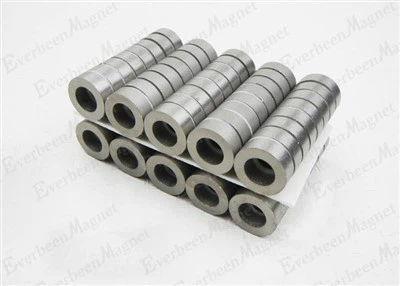
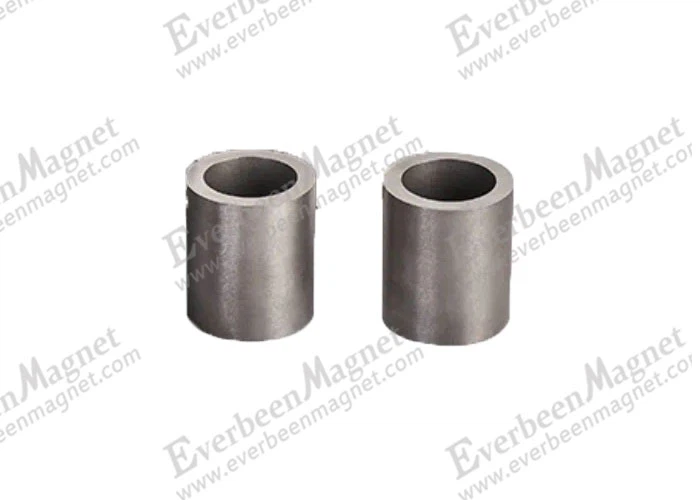
Sizes & Shapes: Standard samarium cobalt magnet shapes include discs, blocks, rings, and arc segments in a variety of sizes and grades. Non-standard shapes can also be custom fabricated to blueprint specifications from raw stock. We can custom manufacture samarium cobalt magnets in virtually any shape and size to meet your project's exact requirements.


Temperature Considerations: Samarium cobalt magnets exhibit magnetic properties that are very stable with temperature, and can be used in applications where temperatures reach up to 572°F (300°C). They perform well for applications where the stability of magnetic characteristics is critical.


Manufacturing Methods: Samarium cobalt magnets are extremely brittle, so they are prone to chipping and cracking. Therefore, special machining techniques involving diamond-grinding must be used to machine this material prior to magnetization.


Surface Treatments: The corrosion resistance of Samarium Cobalt is very good, therefore coatings to prevent corrosion or oxidation are generally not required.


Magnetizing & Assembly Considerations: SmCo magnets are anisotropic, and can only be magnetized in the orientation direction. Magnetizing fields in excess of 50 kOe are required to saturate these materials.


Handling & Storage: Samarium cobalt magnets are extremely brittle, but magnetically very strong. Therefore, special care must be taken when handling these to avoid injury to personnel and damage to the magnets.


Sm2co17 Samarium Cobalt Magnet


How Does Temperature Affect SmCo magnets

SmCo magnets certainly come into their own at high operating temperatures and their performance will begin to exceed that of special high-temperature neodymium magnets from 150 degrees Celsius. Although SmCo magnets are not as strong as other rare earth magnets such as neodymium magnets, they can still remain magnetic at temperatures much higher than the threshold of neodymium magnets and can withstand temperatures as high as 350 degrees celsius.
The temperature coefficient for Samarium cobalt is approximately -0.04% per degree C rise in temperature and this loss is fully recovered if the maximum operating temperature is not exceeded. Due to its thermal stability, SmCo magnet is the preferred mgnet for many demanding applications such as motors and generators in the manufacturing, automotive, and aerospace industries where operating temperatures are very high.
SmCo magnets not only perform well at high temperatures, but they also retain their magnetic properties even below absolute zero (-237 degrees celsius), which makes them popular in low-temperature applications.


Attributes Of SmCo Magnet

Some attributes of samarium-cobalts are:
● SmCo magnets are extremely resistant to demagnetization.


● These magnets have good temperature stability [(maximum use temperatures between 250 °C (523 K) and 550 °C (823 K)]; Curie temperatures from 700 °C (973 K) to 800 °C (1,070 K).


● SmCo magnets have a strong resistance to corrosion and oxidation resistance, usually do not need to be coated and can be widely used in high temperature and poor working conditions.


● They are brittle, and prone to cracking and chipping. SmCo magnets have maximum energy products (BHmax) that range from 14 megagauss-oersteds (MG·Oe) to 33 MG·Oe, that is approx. 112 kJ/m3 to 264 kJ/m3; their theoretical limit is 34 MG·Oe, about 272 kJ/m3.


● Sintered SmCo magnets exhibit magnetic anisotropy, meaning they can only be magnetized in the axis of their magnetic orientation. This is done by aligning the crystal structure of the material during the manufacturing process.

Smco Disc Magnet


How Are SmCo Magnets Made


There are two methods for manufacturing these products. One method is called sintering. Super-fine samarium powder is molded into a solid thing through pressing. The first technique is called isostatic pressing. It entails a unique rubber die that hosts SmCo powder as it is gently pressed with equal force in all directions.
The isostatic method produces a solid material with higher magnetic properties but tinier in size. There is also an observation that isostatically produced parts have magnetic characteristics that boast lower uniformity. Compression bonding is another technique used to make SmCo magnets. During this process, a very special type of samarium powder is mixed with a plastic carrier substance. Then it is die-pressed and heated.
The compression-bonded components often have close tolerance thus demanding no machine finishing. What's more, these parts can be transformed into more complicated magnet shapes. Compared to sintered magnets, compression-bonded units have lower-energy products.


Smco Ring Magnet

Advantages of SmCo Magnet


● Can be used in extremely cold conditions (e.g. to a few Kelvin above absolute zero).


● SmCo can be used up to +300 degrees C (572F), the H rated versions up to +350 degrees C (662F).


● High coercivity (Hci) to resist demagnetisation.


● Above +150 to +180 degrees C (302-356F) the SmCo magnet starts to offer more performance than NdFeB magnet grades.


● SmCo is regarded as being corrosion resistant.


● Very low field strength change with varying temperature.


Types of SmCo Magnets


SmCo magnets are classified into two based on the ratio of samarium to cobalt used during production.


SmCo5
In this type of samarium cobalt magnet, the ratio of samarium to cobalt is 1:5. This means five cobalt atoms are used for every atom of samarium used. This type of samarium cobalt magnet was discovered before the other type. However, it is no longer used frequently because the second type of samarium cobalt magnet has overtaken it. Its maximum energy product is 15 to 24 MGOe. This type of samarium cobalt magnet is highly resistant to corrosion.


Sm2Co7
In this type of samarium cobalt magnet, the ratio of samarium to cobalt is 2:7. This implies that two samarium atoms are added per seven atoms of cobalt. Although this type of samarium cobalt magnet was discovered after SmCo5, it has gained wider popularity for being stronger. Its maximum energy product is 20 to 32 MGOe. The downside of using this type of samarium cobalt magnet is that it is susceptible to corrosion when it comes in contact with water because it contains traces of iron.


Safety Tips When Handling SmCo Magnets


It is extremely important to always practice caution and safety when handling samarium cobalt magnets.
This can avert injuries and damage as well as elevate the productivity of the magnets. Here are some of the safety tips one should practice:
● Always put on protective armor such as gloves and goggles to avert unnecessary injuries.
● Always keep the SmCo magnets far from sensitive electronics to prevent interference and data loss.
● Always reserve the SmCo permanent magnets as per the instructions provided. Keep them far from external magnets which can interfere with the alignment of the magnetic domains.
● Employ magnetic shielding techniques when handling extremely robust samarium cobalt magnets.
● Always ensure that they are inaccessible to children to avert bodily harm.
● Always adhere to the usage instructions provided by the SmCo magnet manufacturer.


What Are the Common Applications of Samarium Cobalt Magnets


Samarium cobalt magnets are most commonly used in higher temperature product applications due to their properties.


High Performance Motors

Magnetic Bearings

Pipeline Inspection

Actuators

Sensor Systems

Robotic Arms

Generators

Drilling Equipment

Gyroscopes

Turbo Machinery

Wind Turbine Equipment

Accelerometers

Electric Motors

Energy Recovery Systems

Particle Accelerators

Magnetic Separation Devices

Medical Devices

Sputtering Deposition

Traveling Wave Tubes

Missile Components

Magnetic Drive Components

Magnetic Couplings

Industrial Automation Equipment

Arrays & more


SmCo Magnets: An Ideal Choice for High-Temperature and High-Performance Applications


Samarium cobalt magnets, also known as SmCo magnets, are rare-earth permanent magnetic materials made of samarium and cobalt elements. They exhibit excellent properties such as high magnetic energy product, high coercivity, and high-temperature stability, thus are widely used in high-temperature and strong magnetic field environments. Compared with conventional ferrite magnets, SmCo magnets can operate at temperatures up to 550°C with limited loss of magnetic properties.
In recent years, with the development of aerospace, oil exploration, electronic information technologies, the demand for high-performance and high-temperature magnetic materials has surged. SmCo magnets have come to meet this market need and their application areas are expanding rapidly. SmCo magnets show great application potential in new energy vehicle brushless motors, aerospace instrumentation, deep-sea exploration equipment, electronic information devices and other high-tech fields.
Due to the scarcity of samarium and cobalt resources, the raw material cost of SmCo magnets remains high, which has slowed their commercial application. According to industry reports, samarium and cobalt resources are becoming more and more difficult to mine and may face shortage in the future.
With their excellent high-temperature properties and superior magnetic properties, SmCo magnets play an important role in high-tech industries.


Application of SmCo Magnet


SmCo magnet uses school home & office
SmCo magnets are rare-earth permanent magnetic materials. These magnets offer superior temperature ratings and resistance to demagnetization compared to Neodymium magnets, making them popular alternatives. SmCo magnets are used in applications where precision control of magnetic field concentration is important, such as aircraft, marine or spacecraft applications where precise concentration control of its magnetic field must be ensured.
SmCo magnets are an increasingly popular choice among industrial designers and manufacturers for creating targeted magnetic fields. Like all rare earth magnets, this material comes in different shapes and sizes to best meet each application.
There are two primary categories of SmCo magnet materials; those falling within series 1-5 range (energy product measured in mega gauss-oersteds (MGOe), with 15-24MGOe), and those within 2-17 type with higher maximum operating temperatures and increased maximum temperature capabilities. Both alloys consist of mixtures combining iron, cobalt, zirconium, hafnium as well as others such as zirconium. Since sintered magnet materials are designed primarily to possess magnetic characteristics rather than mechanical properties, you should expect some small cracks or porosity or voids within these sintered materials.


SmCo magnets in industry
Standard and custom SmCo magnets designed to withstand corrosion-prone and high temperature environments are available from this supplier. SmCo magnets can be found in generators, motor couplings, actuators, sensors and other industrial applications, but are more costly than NdFeB magnets due to better resistance against corrosion, demagnetization and higher working temperatures of 350 degrees C. Available as blocks, rings or discs they can also be cut to size to meet compliance.
SmCo magnets are comprised of an alloy of 35% samarium and 60% cobalt, along with small amounts of iron, hafnium, praseodymium and zirconium. Although not as powerful as Neodymium Magnets (maximum energy product approximately 30 MGOe), SmCo magnets do possess three significant advantages over them - more resistance to corrosion, oxidation, demagnetization and heat shock, higher working temperature, higher working temperature and greater resistance, more fragile so requires storage at low humidity and mild temperatures so as not to chipping off pieces during use or storage conditions to avoid chipping brittleness brittleness brittleness is necessary preventing chipping off chips being chipping off during storage periods limiting chipping off.


Our Factory


Everbeen Magnet is located in Xiamen, a coastal city on the southeast coast of China. It has ocean shipping and air shipment ports leading to all over the world, with a developed economy and convenient logistics.
Everbeen Magnet specializes in the development and processing of various permanent magnet materials such as NdFeB,Ferrite magnets and accessories, electronic components, and magnetic application devices. We have been deeply involved in the field of permanent magnet materials for more than 20 years. We can Adopt sophisticated process management and high-quality services to meet customer needs, accurately provide cost-effective products.


productcate-1-1
productcate-1-1


Main Production Equipment


productcate-1-1
productcate-1-1
productcate-1-1
productcate-1-1
productcate-1-1
productcate-1-1


Quality Certificate


20240418160716548fb
productcate-1-1
productcate-1-1


FAQ


Q: What are SmCo magnets used for?

A: They are routinely used in high-performance motors, machinery, pumps, medical devices, magnetic couplings, magnetic separators and other equipment for automotive, aerospace, medical, military and industrial automation industries.

Q: How strong are SmCo magnets?

A: Samarium–cobalt magnets have maximum energy products (BHmax) that range from 14 megagauss-oersteds (MG·Oe) to 33 MG·Oe, that is approx. 112 kJ/m3 to 264 kJ/m3; their theoretical limit is 34 MG·Oe, about 272 kJ/m3.

Q: How are SmCo magnets made?

A: Samarium cobalt magnets have been produced for over 40 years. A number of common manufacturing processes can be used to produce samarium cobalt magnets but typically, a method of reduction and melting is used followed by a process of bonding or sintering the raw material to form the magnet.

Q: What is the curie temperature of SmCo?

A: Between 700 and 800 ºC. lthough the curie temperature for SmCo material is between 700 and 800 ºC, currently alloy compositions can only be used up to maximum temperature between 250 and 350 ºC.

Q: What is the permeability of SmCo magnet?

A: Magnetic permeability is the characteristic of a material which represents the establishment of an induced internal magnetic field by an external magnetic field. The magnetic permeability is the proportionality between the induced field and the applied magnetic field strength.

Q: What is the maximum temperature for SmCo magnets?

A: Samarium cobalt magnets are rare earth magnets made from samarium, cobalt, and other metallic rare earth materials. They have a high magnetic energy product, a very low-temperature coefficient, and a maximum operating temperature of 350°C.

Q: What happens if SmCo magnet touches electricity?

A: SmCo magnet exerts a force on current-carrying wire. This simple device shows that when an electrical current flows through a SmCo magnetic field, a force is exerted on the current. This force can be used to make an electric motor.

Q: Does stacking SmCo magnets make them stronger?

A: By adding one SmCo magnet on to the other, e.g. stacking, the stacked SmCo magnets will work as one bigger SmCo magnet and will exert a greater SmCo magnetic performance. As more SmCo magnets are stacked together, the strength will increase until the length of the stack is equal to the diameter.

Q: Where are samarium cobalt magnets used?

A: Samarium cobalt magnets, because of their characteristics are most commonly used in applications which require high operating temperatures such as generators, pump couplings, sensors, motors, marine applications and in the automotive, aerospace, military and food and manufacturing industries.

Q: How strong are SmCo magnets?

A: Samarium–cobalt magnets have maximum energy products (BHmax) that range from 14 megagauss-oersteds (MG·Oe) to 33 MG·Oe, that is approx. 112 kJ/m3 to 264 kJ/m3; their theoretical limit is 34 MG·Oe, about 272 kJ/m3.

Q: What are the benefits of samarium cobalt magnets?

A: Samarium cobalt magnets are not as powerful as super-strong neodymium magnets but they have some significant advantages. Samarium cobalt magnets work over a wider temperature range, have superior temperature coefficients and have much greater corrosion resistance.

Q: How does temperature affect samarium cobalt magnets?

A: Samarium cobalt magnets are rare earth magnets made from samarium, cobalt, and other metallic rare earth materials. They have a high magnetic energy product, a very low-temperature coefficient, and a maximum operating temperature of 350°C. Although their maximum magnetic energy product (BHmax), coercivity, temperature stability, and chemical stability exceed those of the NdFeB magnets when the working temperature is above 180℃, the surrounding temperature still has an important influence on their performance.

Q: What grade is a samarium cobalt magnet?

A: The range of SmCo magnet grades typically extends from 16 MGOe to 32 MGOe. This range allows for optimizing cost, performance, and operational temperature resistance.

Q: Why do we have to take care while storing the samarium cobalt magnets?

A: When magnets are kept for a long time leaving the magnetic poles free or exposed, they slowly lose their magnetic properties. Therefore, magnets have to be preserved to prevent the loss of magnetic properties.

Q: How do you make a samarium cobalt magnet?

A: Firstly, the raw materials required to produce a samarium cobalt magnet are heated in an induction furnace filled with argon gas and melted to form the alloy material.
Next, the liquid alloy is then poured into moulds and cooled with water to form ingots.

Q: What is the grade of SmCo magnets?

A: The range of SmCo magnet grades typically extends from 16 MGOe to 32 MGOe. This range allows for optimizing cost, performance, and operational temperature resistance. There are two main types of Samarium Cobalt magnet alloy.

Q: What is the relative permeability of SmCo?

A: Our range comprises a wide selection of various SmCo materials with differing magnetic properties. They permit material selec- tion tailored to individual application requirements. We look for- ward to advising you in detail. * = Reduced temperature coefficient of Br The relative permeability (μp) is between 1.04–1.15.

Q: What is the meaning of SmCo magnet?

A: Samarium cobalt SmCo is the alternative Rare Earth magnet. It is often used in aerospace, automotive and military applications. It is usually weaker than NdFeB Neodymium at room temperature. Samarium Cobalt SmCo is capable of use in extremes of cold and heat.

Q: How to measure SmCo magnet magnetic permeability?

A: There are several methods for testing magnetic permeability, but the most common method is the magnetic balance method, also known as the Gouy method. The magnetic balance method involves suspending a sample of the material to be tested in a magnetic field and measuring the force exerted on the sample by the field.

Q: What is the temperature coefficient of SmCo?

A: Samarium cobalt magnets can operate in temperatures up to 300°C. The temperature coefficient for Samarium Cobalt is approximately -0.04% per degree C rise in temperature and this loss is fully recovered if the maximum operating temperature is not exceeded.

As one of the most professional smco magnet manufacturers and suppliers in China, we're featured by quality products and good service. Please rest assured to buy customized smco magnet at competitive price from our factory.

magnet for energy, household magnet, magnetic equipment

(0/10)

clearall