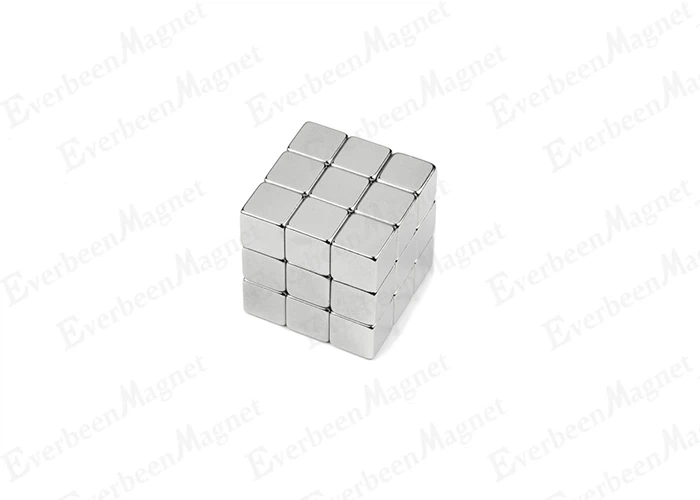
Neodymium Magnet

 
Why Choose Us?
 
01/

Expertise and Experience
20+ years of experience in the magnet industry, all our sales have 12+ years expertise and knowledge in various types of permanent magnets.

02/

Customization
Most of permanent magnets are customized according to drawing and requests.Be flexible in accommodating customer needs, whether it involves order adjustments, additional information, or other special requests.

03/

Diverse Product Range
Besides Neodymium magnet, we also provide Alnico magnet, Samarium Cobalt (SmCo) magnet, Ferrite(ceramic) magnet, Flexible magnet(Rubber magnet) and Magnetic Products.

04/

Quality Assurance
All magnets are under our strict quality control. We assure you what we offer is superior and quality products. From the beginning of the production to the inspection of finished goods, we pay attention to every detail and try our best to avoid any mistakes carefully.

05/

Effective Communication
Provide responsive and effective communication during the purchasing process, addressing any inquiries promptly and offering support to ensure a smooth transaction.

06/

Timely Delivery
15-30 days according to magnet order information.We promise timely delivery to ensure you receive the goods on time.


What Is a Neodymium Magnet


A neodymium magnet (also known as NdFeB, NIB or Neo magnet) is a permanent magnet made from an alloy of neodymium, iron, and boron to form the Nd2Fe14B tetragonal crystalline structure. They are the most widely used type of rare-earth magnet.
They have replaced other types of magnets in many applications in modern products that require strong permanent magnets, such as electric motors in cordless tools, hard disk drives and magnetic fasteners.
NdFeB magnets can be classified as sintered or bonded, depending on the manufacturing process used.


First 123 Last 1/3

12 Advantages of Neodymium Magnets


Rare earth magnet fasteners offer several advantages over traditional fasteners. Here are some of the key advantages:

Convenience and ease of use
Neodymium magnets are simple to attach and remove without the need for complex tools or equipment. They can be a great alternative when you want to join objects or materials without drilling holes or welding.


Quick fastening and unfastening
Magnet fasteners are usually easy to install without the need for tools, reducing assembly time. The magnetic assemblies can be quickly or simplely snap or pull. Saving time compared to traditional fasteners that may require threading or buttoning.


Quiet operation
Since rare earth neodymium magnets can replace drilling and welding. Which are user-friendly and don't create loud sounds during installation or removal, contributing to a more comfortable and pleasant experience.


Minimal wear and tear
Traditional fasteners, like buttons or zippers, can wear out over time with repeated use. Strong holding force magnetic fasteners are less prone to such wear and tear, resulting in longer-lasting performance.


No snagging or tangling
Zippers and velcro can sometimes snag on fabric or other objects. Using magnet fastener can reduce the risk of damage or frustration.


Aesthetically pleasing
Bonded neodymium magnets covered in rubber and come in various colors and shapes. The rubber coating magnets with colorful options make them visually attractive and enjoyable to use.


Used in wide range of applications
You can use the neodymium fastener magnets in a wide range of applications. Which includes clothing, bags, jewelry, and even some types of doors and cabinets, because of their versatility.


Durability
Durable magnetic fasteners are less likely to break than traditional ones, making them long-lasting and reliable.


Reusability
Magnet fasteners allow for frequent disassembly and reassembly without damaging the materials. Fastening magnets are highly reusable, as they don't experience mechanical wear and maintain their magnetic strength over many cycles.


Non-damaging
Rubber coated magnets, pot magnets, and channel magnets don't harm surfaces they stick to, unlike regular fasteners. Magnetic fasteners are non-invasive, leaving surfaces clean and free from damage. Coated neodymium magnets are ideal for applications where aesthetics matter.


No need for special tools
Traditional fasteners like sewing buttons may require specific tools and skills for installation or repair. Magnetic connectors are generally easier to install and replace.


Shapes, Sizes and Properties of Neodymium Magnets


Neodymium magnets are produced in a variety of specifications, sizes and versatile designs for different applications.
Some of the most common shapes include:
● Neodymium magnet balls
● Neodymium ring magnets
● Neodymium magnet cubes
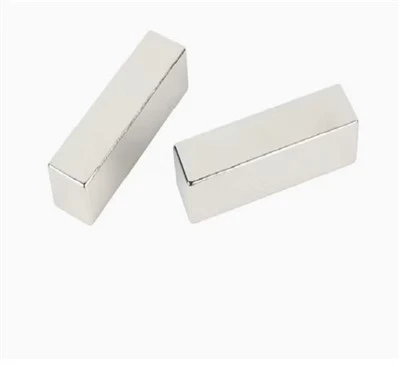
● Neodymium rectangular magnets
Other shapes include discs, bars, blocks and pots. Both counterbore and countersink varieties are widely available.


As these magnets are so powerful, smaller sizes are usually sufficient for many applications. However, large neodymium magnets are also available for specialist tasks.

When measuring sizes, you should consider:
● The diameter, width and length
● Its thickness
● The thread size


Physical and Mechanical Properties
In comparison to other types of permanent magnet, NdFeB has:
A stronger magnetic field: A property called remanence.
Much greater resistance to demagnetisation: A quality called coercivity.
A denser magnetic field: Technically termed a high maximum energy product or level of saturation magnetisation. This provides these magnets with significant pulling power.
Lower resistance to high temperatures, which will induce demagnetisation. The temperature at which a magnet will demagnetise is called its Curie temperature.


Neodymium Magnet Safety Considerations
Sintered NdFeB Magnet for Electric Motor
Super Strong Ring Magnets
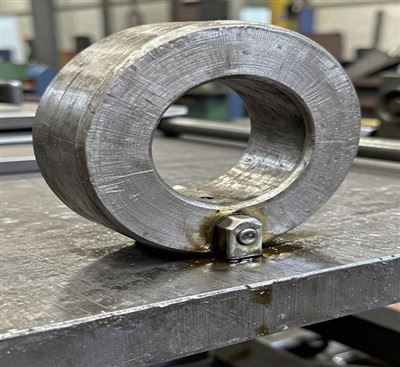
Large Neodymium Ring Magnets
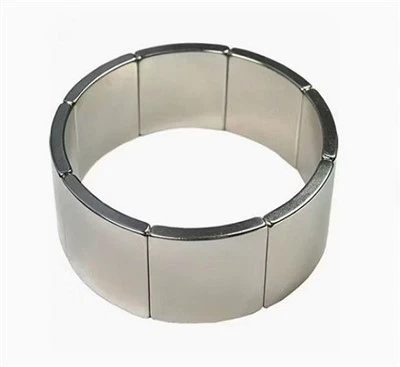
Arc Segment Neodymium Magnets

Magnetization
Neodymium contains an incredibly strong magnetic field, so it can be dangerous if it comes into close contact with certain objects. A neodymium magnet can disrupt many kinds of electronic equipment, with a range of repercussions.
Do not get it close to people with a pacemaker or other implanted device, as the magnetic field could interfere with the device, causing serious effects on health and safety.
When storing, keep neodymium magnets away from items such as hard drives, disks, and videotapes. Neodymium magnets can also interfere with navigational devices, including compasses. The effects of strong magnetic fields on navigation is one reason these magnets are typically transported via ground.


Jumping
Neodymium magnets are strongly attractive, even from several inches away. The force is powerful enough to pinch skin and cause bodily injury. Depending on the size of the magnet, it could break a finger.
If swallowed accidentally, these magnets have attracted across the membrane of intestines and other organs, causing severe damage and even death.
Wear gloves to protect against pinching hazards, and use spacers (plastic, wood, or cardboard) when separating magnets for storage and shipping. Keep magnets away from children.


Breakage
Wear eye protection to avoid damage to the eyes. There is a high risk of breakage due to the brittle nature of neodymium. When two magnets are drawn quickly together, the force can chip or shatter the magnet. These flying shards and fragments then pose a danger to handlers and bystanders.


Flammability
The dust or powder from a neodymium magnet is highly flammable. Avoid mechanically damaging the magnet, such as by drilling or grinding, in poorly ventilated areas. The resulting dust may easily combust.


Corrosion
Uncoated neodymium magnets are subject to corrosion in humid environments, which will reduce the strength of the magnet. Some common coatings that prevent against corrosion include nickel/copper/nickel, epoxy and parylene.


Arc Segment Neodymium Magnets


What Materials Do Neodymium Magnets Attract

Neodymium magnets are attracted to ferromagnetic materials, which are materials that are capable of being magnetized and are attracted to magnets.
Ferromagnetic materials include iron, steel, nickel, cobalt, and some alloys of these materials. Neodymium magnets will also attract other rare earth magnets, such as samarium-cobalt magnets and cerium-iron-cobalt magnets.
Neodymium magnets will not attract non-ferromagnetic materials, such as copper, aluminum, gold, and silver.
It is worth noting that the strength of the attraction between a neodymium magnet and a ferromagnetic material will depend on the specific properties of the magnet and the material, as well as the distance between them. The strength of the magnetic field decreases exponentially with distance, so the attraction between the magnet and the ferromagnetic material will be stronger at closer distances.


Are Neodymium Magnets Safe


Neodymium magnets are perfectly safe for humans and animals as long as you handle them with care. For older kids and grown ups, smaller magnets can be used for everyday applications and entertaining.
But remember, magnets are not a toy for toddlers and minor kids to play with. You should never leave them alone with strong magnets like neodymium magnets. First of all, they might choke on the magnets if they swallow them.
You should also be careful not to hurt your hands and fingers when handling stronger magnets. Some neodymium magnets are strong enough to cause some serious damage to your fingers and/or hands if they get jammed between a strong magnet and metal or another magnet.
You should also be cautious with your electronic devices. Strong magnets like neodymium magnets can as mentioned before, damage some electronic devices. Therefore, you should keep your magnets in a safe distance to tv's, credit cards, computers, hearing aids, speakers and similar electronic devices.
In general, you should try to follow these 5 tips when handling neodymium magnets.
● You should always wear safety goggles when handling large and strong magnets.
● You should always wear protective gloves when handling large and strong magnets.
● Neodymium magnets are not a toy for children to play with. The magnets are very strong!
● Keep neodymium magnets at least 25 cm away from electronic devices.
● Keep neodymium magnets in a very safe and long distance from individuals with a pacemaker or an implanted heart defibrillator.


Are There Different Types of Neodymium Magnets

The performance of a neodymium magnet may differ depending on the magnet's material, grade, and other factors.
A magnet's grade specifies the quality or purity of the raw material used to construct the magnet. If all other factors are equal, a magnet with a higher grade will have greater strength. The magnet's grade is listed as it's "N" number. The most common grades for neodymium magnets are N35, N38, N40, N42, N48, N50, N52, and N55.
The Gauss rating of neodymium magnets determines how fast the magnet works. This may be referred to as magnetic induction or magnetic flux density, and it's sometimes represented by the symbol G or Gs. The Gauss system of measurement, which is still commonly used in magnetism, has largely been supplanted by the International System of Units (SI), so you may see a Gauss rating expressed in SI rather than Gs. The SI unit for magnetic flux density is the Tesla (T), which equals 10,000 gauss.
In addition to grade and magnetic flux density, a magnet's performance may be influenced by its shape and thickness. In most cases, with all else being equal, larger magnets tend to produce greater pull strength than smaller magnets.
Environmental temperature and proximity to other magnetic material can also affect the performance of the magnets. High temperature applications and competing magnetic fields can reduce the performance of neodymium magnets or even de-magnetize them, so it's important to understand how the magnet will be used when selecting the right magnet for the job.

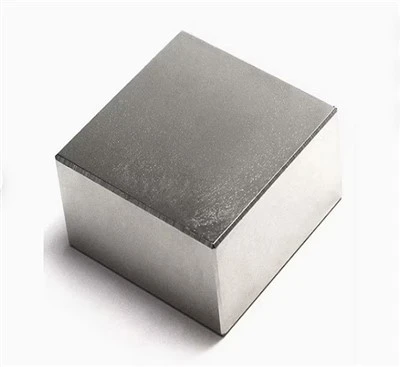
Neodymium Block Square Magnet 10x10x10mm


What Are the Differences Between Neodymium Magnets and Ceramic Magnets


Neodymium magnets and ceramic magnets are both useful materials with strong magnetic properties, but they have some important differences that should be considered when choosing a magnet for a particular application. There are several important distinctions between these two types of magnets, including composition, strength, durability, and cost.


Composition: One key difference between neodymium magnets and ceramic magnets is their composition. Neodymium magnets are made from an alloy of neodymium, iron, and boron, while ceramic magnets are made from a type of iron oxide known as ferrite.


Strength: Another difference is their strength. Neodymium magnets are much stronger than ceramic magnets, with a maximum energy product that can reach up to 52 MGOe. In comparison, ceramic magnets have a maximum energy product of up to about 5 MGOe. This means that a neodymium magnet of the same size as a ferrite magnet is far stronger.


Cost: There is also a difference in cost between these two types of magnets. Neodymium magnets are generally more expensive than ceramic magnets due to their higher strength and more complex manufacturing process.


Durability: Neodymium magnets are also more resistant to corrosion and can withstand higher temperatures. Ceramic magnets are more susceptible to corrosion and can become demagnetized at high temperatures.


Neodymium magnets are the strongest type of permanent magnets and are often used in applications where a strong magnetic field is required, such as in motors and generators. Ceramic magnets are less expensive and are often used in applications where a less powerful magnetic field is sufficient, such as in fridge magnets and sensors.


Neodymium Magnets Are Used For


Hard disk drives
A hard disk drive records data by magnetising and demagnetising a thin film of ferromagnetic material on a disk. Each disk is separated into many tracks and sectors and each sector has many tiny individual magnetic cells which are magnetised by the drives read/write head when data is written to the drive. Hard drive heads are made from ceramic wrapped in a fine wire coil.


Dentures
Tiny neodymium magnets can be used for attachments in corrective devices or for holding together replacement dentures where several teeth are missing. Because of their strength, even tiny neodymium magnets can be effective and when coated they have an increased resistance to corrosion.


Magnetically coupled pumps
Magnetically coupled pumps consist of a motor-driven shaft with an attached ring of powerful magnets and another smaller ring of magnets attached to another shaft connected to the impeller that sits within the larger ring of magnets. As the motor turns the drive shaft and one set of magnets, the magnetic field generated turns the other set of magnets which powers the impeller.


Door catches
Electric motors rely upon a combination of an electromagnet and a permanent magnet, usually a neodymium magnet to convert electric energy into mechanical energy. A generator is the reverse, it converts mechanical energy into electric energy by moving a conductor through a magnetic field.
Neodymium magnets are used in public, commercial and residential buildings to create magnetic door catches. Countersunk or pot magnets recessed into the surface of a door are used to attract another wall mounted magnet or steel disk. Strong neodymium magnets will easily hold the weight of a door and the leverage provided by the door means the magnets can be easily separated.


Motors and generators
Electric motors rely upon a combination of an electromagnet and a permanent magnet, usually a neodymium magnet to convert electric energy into mechanical energy. A generator is the reverse, it converts mechanical energy into electric energy by moving a conductor through a magnetic field.


Jewellery
Small magnets are used in the production of jewellery and for jewellery clasps. Counter-bored neodymium magnets with opposite poles on the counter-bored faces provide a secure hold and because neodymium is the strongest magnetic material in the world a magnet just 5mm in diameter can be effective.


Bearings
Magnetic bearings use the concept of magnetic levitation to support moving parts without physical contact. They are used to enable relative motion with very low friction and no mechanical wear even at incredible speeds. Bearings known as passive magnetic bearings use permanent magnets such as neodymium magnet while active magnetic bearings use electromagnets.


MRI scanners
MRI scanners produce a large magnetic field which aligns the protons in a human body in the direction of the magnetic field. Radio frequency waves are then directed at the body producing detailed internal images. Many 'open' MRI machines used in hospitals use large neodymium magnets, they literally help save lives.


Magnetic therapy
Although not clinically proven, many people believe that magnets can relieve pain by subjecting parts of the body to magnetic fields produced by permanent magnets. Because of their strength, neodymium magnets are a popular choice for believers in magnetic therapy.


ABS (anti-lock braking) system sensors
Passive ABS sensors use neodymium magnets wrapped inside copper coils. A sensor is placed close to the ABS reluctor ring and as the ring rotates a voltage is induced in the copper wire. This signal is monitored by the vehicle's computer system and used to define wheel speed.


Levitation devices
Commercially, electromagnets are used for levitation applications such as magnetic levitation transport. However, the availability and affordability of small, strong neodymium magnets means that you can do your own magnetic levitation experiments at home. The trick known as diamagnetic levitation also requires a diamagnetic material such as pyrolytic graphite.


Lifting machinery
Permanent magnets are essential in the heavy engineering and manufacturing industries, used for lifting large ferrous items. Switchable release magnets using super-strong neodymium magnets are commonly used as they are supplied with a quick-release switching mechanism.


Magnetic separators
Most processing facilities will use some form of magnetic separation system to remove contaminating ferrous and paramagnetic items from production or processing lines. This is usually done using a form of conveyor system and strong filter rod magnets.


Reed switches
A reed switch is a switch operated by a magnetic field. Reed switches consist of contacts placed on ferrous reeds, encased in a sealed glass tube. They can be designed to be open or closed by default in the absence of a magnetic field and are activated by bringing a neodymium magnet close to the switch. A typical use for reed switches is detecting the opening and closing of doors in burglary alarm systems.


Crafts and model-making
Neodymium magnets are very popular among craft enthusiasts and model-makers. Because they are so powerful, even a tiny magnet can generate enough magnetic pull to be effective.


Print finishing
Small neodymium magnets are widely used in the print finishing industry as a thin magnet will be powerful enough to attract another magnet even if both are secreted beneath a layer of card, paper or plastic. We have many customers that use our magnets as hidden closures for brochures, binders, boxes, menus and high-end packaging. Usually a pair of magnets is used, but the same effect can be achieved with one magnet and a steel disc.


Our Factory


Everbeen Magnet is located in Xiamen, a coastal city on the southeast coast of China. It has ocean shipping and air shipment ports leading to all over the world, with a developed economy and convenient logistics.
Everbeen Magnet specializes in the development and processing of various permanent magnet materials such as NdFeB,Ferrite magnets and accessories, electronic components, and magnetic application devices. We have been deeply involved in the field of permanent magnet materials for more than 20 years. We can Adopt sophisticated process management and high-quality services to meet customer needs, accurately provide cost-effective products.


productcate-1-1
productcate-1-1


Main Production Equipment


productcate-1-1
productcate-1-1
productcate-1-1
productcate-1-1
productcate-1-1
productcate-1-1


Quality Certificate


20240418160716548fb
productcate-1-1
productcate-1-1


FAQ


Q: What is so special about neodymium magnets?

A: Neodymium magnets are the strongest permanent magnets commercially available, anywhere in the world. They provide unparalleled levels of magnetism and resistance to demagnetisation when compared to ferrite, alnico and even samarium-cobalt magnets.

Q: What is the difference between a neodymium magnet and a regular magnet?

A: First of all, compared with ordinary ferrite magnets, NdFeB strong magnets have a stronger magnetic force. Neodymium magnets are currently the strongest magnets available on the market. They are many times stronger than ordinary magnets in terms of magnetic force.

Q: How can you tell if a magnet is neodymium?

A: The proceeding 'N' refers to neodymium and some magnet grades also feature suffixed letters indicating the coercivity. Common grades include neodymium magnets N52, N50, N48, N45, N42 and N35.

Q: Is neodymium the strongest magnet?

A: Neodymium magnets are the most commonly used type of rare earth magnets. Rare earth magnets are made from rare earth elements found on the periodic table. Neodymium magnets are the strongest rare earth magnets and the strongest magnets in the world.

Q: Which is stronger rare earth magnets or neodymium?

A: Neodymium magnets are a type of rare earth magnet. Rare earth magnets are a class of magnets that are made from rare earth elements and are known for their strong magnetic properties. Neodymium magnets, also known as NdFeB magnets or Neo magnets, are the most powerful type of permanent rare earth magnets.

Q: How long does neodymium magnet last?

A: A permanent magnet if kept and used in optimum working conditions will keep its magnetism for years. It's estimated that neodymium magnets only lose approximately 5% of their magnetism every 100 years.

Q: Why are neodymium magnets so expensive?

A: One of the main reasons is the cost of rare earth elements. They are extremely expensive because they are difficult to obtain in large quantities. In the end any event that causes disruptions to supply or changes in supply can cause prices to fluctuate.

Q: Can neodymium magnets pick up gold?

A: Neodymium magnets will also attract other rare earth magnets, such as samarium-cobalt magnets and cerium-iron-cobalt magnets. Neodymium magnets will not attract non-ferromagnetic materials, such as copper, aluminum, gold, and silver.

Q: Is it safe to touch neodymium magnets?

A: Some neodymium magnets are strong enough to cause some serious damage to your fingers and/or hands if they get jammed between a strong magnet and metal or another magnet. You should also be cautious with your electronic devices.

Q: How to make neodymium magnets stronger at home?

A: You can try rubbing a heavy-duty, strong magnet against the weaker one, using linear strokes in one direction for about 15 minutes. The stronger magnet may be able to realign the magnetic domains of the weaker magnet, therefore allowing it to regain some of its original strength.

Q: What can a neodymium magnet pick up?

A: Neodymium magnets are attracted to ferromagnetic materials, which are materials that are capable of being magnetized and are attracted to magnets. Ferromagnetic materials include iron, steel, nickel, cobalt, and some alloys of these materials.

Q: Does stacking neodymium magnets make them stronger?

A: By adding one magnet on to the other, e.g. stacking, the stacked magnets will work as one bigger magnet and will exert a greater magnetic performance. As more magnets are stacked together, the strength will increase until the length of the stack is equal to the diameter.

Q: Can neodymium magnets be turned on and off?

A: Can neodymium magnets be turned on and off. Generally, no. The neodymium magnets we provide are also called, "permanent magnets." The word "permanent" means they stay magnetized for a long time. They are always on.

Q: Are 2 neodymium magnets stronger than 1?

A: Generally, two magnets set up adjacent to one another will provide slightly less than double their individual pull force.

Q: Which is stronger ceramic or neodymium magnets?

A: Neodymium magnets are much stronger than ceramic magnets, with a maximum energy product that can reach up to 52 MGOe. In comparison, ceramic magnets have a maximum energy product of up to about 5 MGOe. This means that a neodymium magnet of the same size as a ferrite magnet is far stronger.

Q: How much Tesla is a neodymium magnet?

A: 1.4 teslas. Dubbed the world's strongest permanent magnet, neodymium magnets are magnets made of neodymium. To put their strength into perspective, they can produce magnetic fields with up to 1.4 teslas.

Q: How can you tell if a magnet is neodymium?

A: The proceeding 'N' refers to neodymium and some magnet grades also feature suffixed letters indicating the coercivity. Common grades include neodymium magnets N52, N50, N48, N45, N42 and N35.

Q: What household products have neodymium magnets?

A: Magnetic door latches: Some cabinet doors and drawers use neodymium magnets to keep them closed. Magnetic jewelry clasps: Neodymium magnets can be found in certain types of jewelry clasps for easy fastening. Magnetic phone mounts: Car phone mounts often use neodymium magnets to hold smartphones securely in place.

Q: How to increase the power of a neodymium magnet?

A: Heating and Cooling. Thermal treatment is another technique used to restore the magnetic strength of weakened magnets. Heating a weak magnet to a high temperature and then rapidly cooling it can help realign its magnetic domains and enhance its magnetic properties.

Q: What do people use neodymium magnets for?

A: In the field of information technology, neodymium magnets are particularly used in hard disc drives, mobile phones, video and audio systems of television. Neodymium magnets are also commonly used in magnetic separators, filters, ionizers, in production of on–off buttons, safety sector and security systems.

As one of the most professional neodymium magnet manufacturers and suppliers in China, we're featured by quality products and good service. Please rest assured to buy customized neodymium magnet at competitive price from our factory.

magnet for storage, large bonded neodymium magnet, bonded neodymium magnet for magnetic couplings

(0/10)

clearall