Alnico Magnet

 
Why Choose Us
 
01/

Expertise and Experience
20+ years of experience in the magnet industry, all our sales have 12+ years expertise and knowledge in various types of permanent magnets.

02/

Customization
Most of permanent magnets are customized according to drawing and requests.Be flexible in accommodating customer needs, whether it involves order adjustments, additional information, or other special requests.

03/

Diverse Product Range
Besides Neodymium magnet, we also provide Alnico magnet, Samarium Cobalt (SmCo) magnet, Ferrite(ceramic) magnet, Flexible magnet(Rubber magnet) and Magnetic Products.

04/

Quality Assurance
All magnets are under our strict quality control. We assure you what we offer is superior and quality products. From the beginning of the production to the inspection of finished goods, we pay attention to every detail and try our best to avoid any mistakes carefully.

05/

Effective Communication
Provide responsive and effective communication during the purchasing process, addressing any inquiries promptly and offering support to ensure a smooth transaction.

06/

Timely Delivery
15-30 days according to magnet order information.We promise timely delivery to ensure you receive the goods on time.


What Are Alnico Magnets


Alnico has a high magnetic strength and a low resistance to being demagnetised and re-magnetised. If coils of wire are wrapped around alnico magnets, they can be easily magnetised and demagnetised by electricity flowing through the coils. One hundred tonnes per square meter clamping chucks can be switched on and off in 0.2 seconds because of alnico magnets.
Alnico are still commonly used in the manufacturing of sensors, guitar pickups, relays and high temperature handling equipment. Alnico magnets play a critical part in all electro permanent magnetic chucks and lifting magnets.


First 12 Last 1/2

Production Process of Alnico Magnet


Alnico magnets are made primarily from aluminum, nickel, cobalt, copper, iron, and sometimes titanium. They can be either cast or sintered.


Cast Alnico: Cast alnico is melted and poured into a mold. Once solidified, the material is rough ground, then heat-treated and cooled, sometimes within a magnetic field. When treated in the presence of a magnetic field, the magnet is called anisotropic (oriented). This orients the material to take on maximum magnetization and allows a higher gauss level.
A cast magnet that is not heat-treated in a magnetic field is called isotropic (non-oriented). After heat treatment and cooling, alnico can be ground to specific tolerances, and then magnetized.


Sintered Alnico: Sintered alnico is made from a powdered mixture of ingredients that are pressed into a die under tons of pressure, sintered in a hydrogen atmosphere and then cooled either within or without a magnetic field (anisotropic vs. isotropic).


Tolerances: For unfinished surfaces (as cast) the following tolerances apply:
0-1": +/- .016" 1-3": +/- .031" 3-5": +/- .047"
5-7": +/- .062" 7-9": +/-.078" 9-12": +/- .094"
Finished surfaces are normally ground to +/- .005".


Magnetizing and Handling: Magnetizing is done after the magnet has been machined to the correct tolerances. Care should be taken when handling alnico material since it is brittle and can chip or break if dropped on a hard surface. Also, because it has a low resistance to demagnetization, it will lose power if it is stored improperly (poles repelling each other). For best results, store magnetized alnico so that pieces are attracting each other, or with a steel keeper.


Machining: Alnico is a very hard and brittle material and does not lend itself to conventional machining.


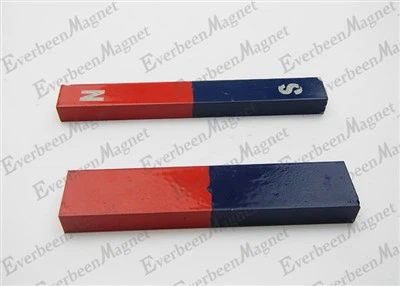
Educational Alnico Bar Magnet


Temperature Effects on Alnico Magnets

Alnico magnets offer the best temperature characteristics of any standard production magnet material available.
Alnico magnets can be used for continuous duty applications where temperature extremes of up to 930°F (500°C) can be expected. Temperatures above 1000°F will result in permanent metallurgical changes which can only be recovered by reheat treating. Excursions to lower temperatures pose less of a problem for most Alnico applications; however, each individual circuit should be examined carefully to determine the effects which may occur as a result of operating at those extremes.


Physical Properties of Alnico Magnets


Alnico Magnets – Physical Properties

Property

Units

Value Sintered Alnico

Value Cast Alnico

Vickers Hardness

Hv

440

440-620

Density

g/cm3

6.8 – 7.0

6.9 – 7.3

Curie Temp TC

°C

810 – 860

740 – 860

Curie Temp TF

°F

1,400 – 1,580

1,460 – 1,580

Specific Resistance

μΩ⋅Cm

50- 70

45 – 75

Bending Strength

kN/mm2

0.35 – 0.76

0.05 – 0.31

Tensile Strength

kN/mm2

0.35- 0.45

0.02 – 0.15

Thermal Expansion

°C-1

+11.0 to +12.4 x10⁻⁶

+11.0 to +13.0 x10⁻⁶

The listed values are approximate and should be used as a reference. Any magnetic or physical characteristics should be substantiated before selecting a magnet material.


Magnetic Properties of Alnico Magnets


There are two types of anisotropic alnico magnets commercially available, sintered alnico magnets and cast alnico magnets. They are manufactured in different ways and have different finished magnetic properties. Sintered anisotropic alnico magnets have a maximum energy product range of 4.45-5.5 MGOe while stronger cast anisotropic alnico magnets range from 4.25-10 MGOe.
Anisotropic magnets have their direction of magnetism permanently set during their manufacturing process giving them a stronger magnetic performance. Isotropic alnico magnets are also available but in a narrower range of cast and sintered grades. Isotropic alnico magnets are less commonly used as they have no preferred direction of magnetism and are therefore weaker, but they can be magnetised in different ways after manufacture giving greater flexibility in magnetic circuit design.
Alnico magnets are typically manufactured with a magnetic length greater than their diameters such as rod or bar shapes. Traditionally horseshoe-shaped magnets are made from alnico, as they are effectively a bar magnet cast in a horseshoe shape, giving the greatest length-to-diameter ratio for the size of the magnet. Alnico magnets are susceptible to demagnetisation and a greater length-to-diameter ratio helps counteract this.
The greatest strength of Alnico magnets and one of the reasons they are still used today is that they have the highest temperature coefficient of all permanent magnetic materials, which means their performance deteriorates less than any other permanent magnetic material per degree Celsius rise in temperature.
Alnico magnets can maintain their magnetic performance up to an incredible 450 degrees Celsius, while Alnico 5 and above will maintain their performance in temperatures up to 525 degrees Celsius. They also have excellent resistance to corrosion as their iron content is very low and only after prolonged exposure to moisture will they begin to corrode. To add further protection from corrosion Alnico magnets are often painted red.


Shapes and Types of Alnico Magnets
Cast Alnico Magnet
Alnico Guitar Magnets
Alnico Horseshoe Magnet
Alnico Guitar Magnets

Bar or Block Magnets
Bar or block magnets are used in schools for experiments, such as demonstrating magnetic fields. They are the weakest shape because of the small area of the poles but are the most common shape. Bar magnets can be used in automation, separation, and holding applications.
Other items can be magnetized using a bar magnet. When a bar magnet is rubbed against a metal object, it aligns the electrons in the object and magnetizes it. The magnetism that is created is not permanent but will hold for a while.


Cylinder Magnets
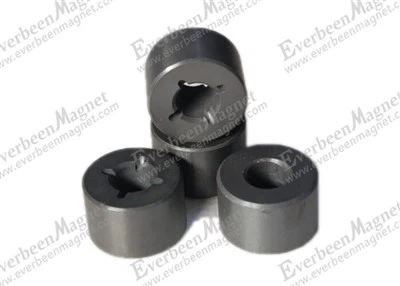
Cylinder magnets have straight parallel sides, circular cross section, and a hollow center parallel to their sides. They are used for seals, sensors, coin collection machines, and guitar pickups. Amplifiers, actuators and motor applications use cylinder alnico magnets for their flux density. In medical applications, they are used for their strength and ability to be adjusted.


Rod Alnico Magnets
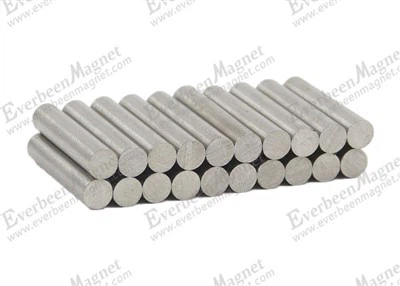
Rod alnico magnets are cylinder shaped and are used in tools and parts. They have high coercivity, strong flux output, and remain stable at high temperatures up to 1000°F or 537°C. Alnico rod magnets have higher residual energy induction and low coercive force compared to ceramic and rare earth materials.


Horseshoe Magnets
Horseshoe magnets are bar magnets that have been formed into a U shape, which makes them strong because the poles are pointed in the same direction. They can be used to pick up metal objects of any size depending on their strength.


Pot Magnets
Pot, holding, or mounting magnets are used for holding applications. They are an alternative to normal fixture and fastening methods. Mounting magnets can be easily removed and relocated, unlike permanent approaches.


Ring Magnets
Ring magnets are round with a hole in the middle and are sometimes referred to as donut magnets. The location of their north and south poles depends on the way they were polarized. One half of the magnet is always north, while the other is south. Certain kinds of polarization create magnets that are split into quarters or eighths.
Ring magnets are used in science experiments and for medical applications. People with implanted cardioverter defibrillators, or ICDs, automatically receive shocks to their hearts if the rhythm becomes irregular. When the device malfunctions, it shocks the patient unnecessarily, which leads to irregular rhythms. Placing ring magnets on a patients' chest, over the ICD, disables the device.


Alnico Magnet Coatings
Alnico magnets have strong resistance to oxidation and corrosion and do not require a protective coating, plating, or surface protection. Their corrosion resistance is so strong that they are not affected when exposed to oil, solvents, gasoline, or alcohol. Their one vulnerability is their iron content. If they are exposed to water for an extended period of time, they get surface corrosion.
Though a coating is not needed, manufacturers will paint alnico magnets to improve their appearance and cover their natural dark gray color. They can also be coated with chrome or nickel.
Alnico magnets can be coated or plated using a wide array of materials. In many cases, they will have a coating applied if it is necessary for an application. Cosmetic treatments, bonding, internal use, and to increasing surface hardness are some of the reasons for alnico magnets to be coated.


Advantages of Alnico Magnet

● Cast Alnico offers a near net shape. Cast alnico can be produced to complex shapes with complex magnetic patterns.


● Alnico Br as high as NdFeB at room temperature.


● Can be used up to 450-550 degrees C (842-932F).


● Least variation in magnetic output with temperature change of any magnetic material.


● Can be cast in very large sizes.

Large Ceramic Magnet


Structural Use of Alnico Magnets


There is a risk of chipping or breaking the magnets because all magnets are inherently brittle. It is advised to not put magnets in conditions of mechanical stress e.g. in load bearing situations.
Alnico does however have a low coercive force, Hc. This means that it is easily demagnetized by external demagnetising fields but it is also very easy to magnetise to saturation.
It is therefore possible to magnetise the magnet when part of an assembly (providing the means to magnetise is possible). But, it also means that Alnico may also self demagnetize if the design is poor (it depends on the total magnetic circuit). The working point changes if the magnetic circuit changes. Self demagnetisation occurs because the magnetic field from the magnet can pass back through the magnet itself (the magnetic path is more preferable than the air surrounding the magnet), which is thus an external demagnetising field applied by the magnet to itself (all magnets in free space will apply a self –demagnetising field but only magnets with very low working point and/or a low Hci values will show demagnetisation).
It is possible to build a magnetic assembly containing Alnico, magnetise it to full saturation (with a pulse of sufficient strength, up to 1Tesla usually, and longevity to overcome any eddy currents in magnetic steel components), then deliberately weaken it magnetically (by demagnetisation using a controlled external magnetic field) until the assembly offers the required field strength at the desired air gap location.
Alnico is better at resisting self demagnetisation by being longer in the direction of magnetisation than in the dimensions of the pole face (usually termed Length to Diameter, L/D, ratio). A higher L/D ratio increases the working point on the Intrinsic curve. This is why Alnico magnets are very rarely short in length (they are often seen in bar, rod or horseshoe shapes) and a L/D ration of at least 4:1 is ideally required to get good performance from an Alnico magnet or an Alnico magnetic assembly (having Alnico is a ferromagnetic assembly and magnetising in-situ boosts the L/D ratio of Alnico creating a higher magnetic output).
If the design is correct with Alnico, it can outperform many magnets at ambient temperature and all other magnets at high temperatures. To get the most out of an Alnico magnet, the entire magnetic circuit (magnet, ferrous parts nearby, external magnetic fields, etc) needs to be considered.


Our Factory


Everbeen Magnet is located in Xiamen, a coastal city on the southeast coast of China. It has ocean shipping and air shipment ports leading to all over the world, with a developed economy and convenient logistics.
Everbeen Magnet specializes in the development and processing of various permanent magnet materials such as NdFeB,Ferrite magnets and accessories, electronic components, and magnetic application devices. We have been deeply involved in the field of permanent magnet materials for more than 20 years. We can Adopt sophisticated process management and high-quality services to meet customer needs, accurately provide cost-effective products.


productcate-1-1
productcate-1-1


Main Production Equipment


productcate-1-1
productcate-1-1
productcate-1-1
productcate-1-1
productcate-1-1
productcate-1-1


Quality Certificate


20240418160716548fb
productcate-1-1
productcate-1-1


FAQ


Q: Are alnico magnets good?

A: Alnico magnets are a great choice for very high temperature applications, with grades capable of operating at temperature up to 550 degrees C (1022 degrees F).

Q: Is alnico a rare earth magnet?

A: Alnico magnets are made from an alloy of aluminum (Al), nickel (Ni), and cobalt (Co), along with iron and sometimes copper and titanium. Rare Earth Magnets are made from alloys of rare earth elements.

Q: Are alnico magnets better than neodymium?

A: Neodymium or rare earth magnets are some of the strongest permanent magnets available and offer higher performance than Alnico and ferrite, however, Alnico remains one of the most commonly used materials in several applications.

Q: What are the advantages of alnico magnets?

A: The advantages of AlNiCo magnets are high remanence (up to 1.35T) and low-temperature coefficient. When the temperature coefficient is -0.02%/℃, their maximum operating temperature can reach about 520℃.

Q: Do alnico magnets lose their magnetism?

A: Their output changes least when operating at high temperatures when compared to other types of magnet such as ferrite/ceramic magnets, or rare-earth magnets. However, regular increasing temperatures can lead to some loss of magnetism but this very much depends on the shape and size of the magnet.

Q: Are alnico magnets brittle?

A: Care should be taken when handling alnico material since it is brittle and can chip or break if dropped on a hard surface. Also, because it has a low resistance to demagnetization, it will lose power if it is stored improperly (poles repelling each other).

Q: Where are alnico magnets used?

A: While alnico magnets have largely been replaced by stronger rare-earth magnets, alnico are still commonly used in the manufacturing of sensors, guitar pickups, relays and high temperature handling equipment. Alnico magnets play a critical part in all electro permanent magnetic chucks and lifting magnets.

Q: How to tell the difference between ceramic and alnico magnets?

A: Ceramic pickups are brighter and harsher than alnico pickups, as well as usually having higher output. They have strong and sharp highs, pronounced upper mids, punchy bass, and more compressed dynamics.

Q: What is the best alnico magnet?

A: Alnico 5 is the strongest of the three alnico grades. The tone and response of the magnet is more powerful than its two cousins. This makes it perfect for bridge pickups, where there is the least vibration. If you want an aggressive, in-your-face kind of sound, Alnico 5 is your best bet.

Q: Why are alnico magnets called cow magnets?

A: A cow magnet is a kind of veterinary medical equipment used to treat or prevent hardware diseases of cattle. Traditionally, the cow magnets are strong Alnico magnets, in the shape of a smooth rod, about 1 cm by 8 cm (0.4 by 3.1 inches).

Q: Do alnico magnets corrode?

A: They are so resistant to corrosion that even when exposed to motor oil, solvents, petrol and alcohol, they do not corrode.

Q: What is the difference between alnico 2 and alnico 5?

A: AlNiCo V has a stronger magnetic pull than AlNiCo II or III. This translates into tighter low end response and a more aggressive, edgy tone. A good way to imagine the difference between Alnico magnets is to compare them to shocks in a car.

Q: How do you store alnico magnets?

A: Alnico magnets should be stored in a low humidity and mild temperature environment. The magnetized Alnico alloy is very strong and it will attract ferrous particle from the air and surrounding surfaces. These particles will accumulate and appear as small "hairs" on the surface of the magnet or packaging.

Q: Can you machine alnico magnets?

A: Machining alnico is hard and brittle, and prone to chipping and cracking. Special machining techniques must be used to machine this material. Holes must be made by EDM methods. We are fully equipped to machine these materials to your blueprint specifications.

Q: What is the maximum temperature for alnico magnets?

A: Alnico magnets can be used for continuous duty applications where temperature extremes of up to 930°F (500°C) can be expected. Temperatures above 1000°F will result in permanent metallurgical changes which can only be recovered by reheat treating.

Q: How strong are alnico magnets?

A: Sintered anisotropic alnico magnets have a maximum energy product range of 4.45-5.5 MGOe while stronger cast anisotropic alnico magnets range from 4.25-10 MGOe. Anisotropic magnets have their direction of magnetism permanently set during their manufacturing process giving them a stronger magnetic performance.

Q: What are the main characteristics of alnico magnets?

A: Alnico magnets offer high magnetic strength, energies but low coercivities. They are less brittle than Rare Earth magnets, are highly resistant to corrosion, have excellent temperature stability and can be used at very high temperatures. Manufactured through either a casting or sintering process, they can be made into complex shapes (such as horseshoe shapes) that are not possible with other magnet materials.

Q: What grades & shapes are available for alnico magnets?

A: Grades 5 and 8 are the most commonly used Alnico grades. Non-standard shapes can be custom fabricated to blueprint specifications from raw stock in sintered, or cast forms, & we can custom manufacture virtually any shape & size to meet your specialty requirements.

Q: Are there machining constraints for alnico magnets?

A: Alnico magnets are hard and brittle, and prone to chipping & cracking. They require very careful machining & it is not generally recommended that these materials be used for structural or decorative purposes. Machining or drilling cannot be accomplished by ordinary methods. Cutting & grinding should be done prior to magnetizing. Holes must be made by EDM methods. We are fully equipped to machine these materials to your blueprint specifications.

Q: What are some common applications for alnico magnets?

A: Instrumentation, meters, microwave devices, actuators, holding devices, sensors, are among the most common applications for Alnico magnets.

As one of the most professional alnico magnet manufacturers and suppliers in China, we're featured by quality products and good service. Please rest assured to buy customized alnico magnet at competitive price from our factory.

bonded magnet for electronics, magnetic component, custom bonded neodymium magnet

(0/10)

clearall