

Can alnico magnets be used in magnetic resonance imaging (MRI)?
Jun 17, 2025
Magnetic resonance imaging (MRI) is a powerful medical imaging technique that has revolutionized the field of diagnostics. It relies on strong magnetic fields and radio waves to generate detailed images of the internal structures of the body. As an alnico magnet supplier, I often receive inquiries about whether alnico magnets can be used in MRI systems. In this blog post, I will explore this question in depth, considering the properties of alnico magnets, the requirements of MRI technology, and the potential applications and limitations.
Properties of Alnico Magnets
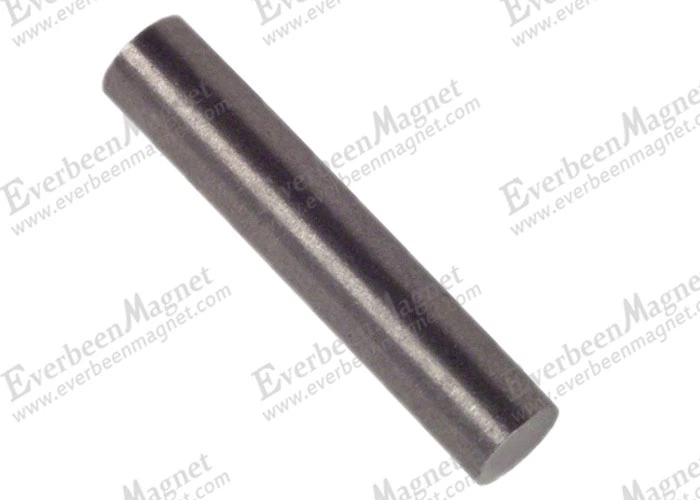
Alnico magnets are a type of permanent magnet made from an alloy of aluminum (Al), nickel (Ni), and cobalt (Co), along with other elements such as iron, copper, and titanium. These magnets are known for their high coercivity, which means they can resist demagnetization, and their relatively high remanence, which is the magnetic field strength remaining after the magnetizing force is removed. Alnico magnets can be produced through casting or sintering processes, resulting in different shapes and sizes, including Alnico Ring Magnet and Alnico 6 Bar Magnet.
One of the key advantages of alnico magnets is their excellent temperature stability. They can maintain their magnetic properties over a wide range of temperatures, making them suitable for applications where temperature variations are significant. Additionally, alnico magnets have a relatively high Curie temperature, which is the temperature at which they lose their permanent magnetism. This property allows them to operate in high-temperature environments without significant loss of magnetic strength.
Requirements of MRI Systems
MRI systems require extremely strong and homogeneous magnetic fields to produce high-quality images. The magnetic field strength in most clinical MRI scanners ranges from 1.5 to 3 Tesla (T), although some research scanners can reach up to 7 T or higher. The homogeneity of the magnetic field is also crucial, as any variations in the field strength can lead to image artifacts and reduced diagnostic accuracy.
In addition to the magnetic field strength and homogeneity, MRI systems also require precise control of the magnetic field gradient. The gradient coils are used to create small variations in the magnetic field along different axes, which allows for the spatial encoding of the signals received from the body. These gradient coils need to be able to generate rapid and accurate changes in the magnetic field, which requires high-power and fast-switching capabilities.
Potential Applications of Alnico Magnets in MRI
While alnico magnets have some desirable properties, such as high temperature stability and coercivity, they are generally not used in the main magnetic field generation of MRI systems. The primary reason for this is that alnico magnets have a relatively low magnetic field strength compared to other types of magnets, such as superconducting magnets. Superconducting magnets can generate magnetic fields of several Tesla, which are necessary for high-resolution MRI imaging.
However, alnico magnets may have some potential applications in MRI systems as auxiliary magnets or in specific components. For example, they could be used in the design of gradient coils to provide additional magnetic field control or to improve the stability of the gradient field. Alnico magnets could also be used in the construction of patient positioning devices or other non-critical components where a lower magnetic field strength is acceptable.
Limitations of Alnico Magnets in MRI
Despite their potential applications, alnico magnets also have several limitations that make them less suitable for use in MRI systems. One of the main limitations is their relatively low magnetic field strength. As mentioned earlier, MRI systems require strong magnetic fields of several Tesla, which alnico magnets cannot provide. Additionally, alnico magnets have a relatively low energy product, which means they are not as efficient at storing and delivering magnetic energy as other types of magnets.

Another limitation of alnico magnets is their relatively high magnetic susceptibility. Magnetic susceptibility is a measure of how easily a material can be magnetized in the presence of an external magnetic field. Materials with high magnetic susceptibility can cause significant distortions in the magnetic field of an MRI system, leading to image artifacts and reduced diagnostic accuracy. While alnico magnets have a lower magnetic susceptibility than some other materials, such as ferromagnetic metals, they are still not ideal for use in the high-field environment of an MRI scanner.
Conclusion
In conclusion, while alnico magnets have some desirable properties, such as high temperature stability and coercivity, they are generally not used in the main magnetic field generation of MRI systems due to their relatively low magnetic field strength and high magnetic susceptibility. However, they may have some potential applications in MRI systems as auxiliary magnets or in specific components.
As an alnico magnet supplier, I understand the importance of providing high-quality magnets that meet the specific requirements of our customers. If you are interested in exploring the potential use of alnico magnets in your MRI-related applications, I encourage you to contact us to discuss your needs. Our team of experts can provide you with detailed information about our Cast Magnets Alnico products and help you determine if they are suitable for your application. We are committed to providing excellent customer service and technical support to ensure the success of your projects.
References
- Bushong, S. C. (2012). Magnetic resonance imaging: Physical and biological principles. Lippincott Williams & Wilkins.
- Haacke, E. M., Brown, R. W., Thompson, M. R., & Venkatesan, R. (1999). Magnetic resonance imaging: Physical principles and sequence design. Wiley-Interscience.
- Schenck, J. F. (1996). The role of magnetic susceptibility in magnetic resonance imaging: MRI magnetic compatibility of the first and second kinds. Medical Physics, 23(6), 815-850.