

Can ceramic magnets be customized in shape?
Jan 22, 2026
Can ceramic magnets be customized in shape?
As a supplier of ceramic magnets, I often encounter inquiries from customers about the possibility of custom - shaping ceramic magnets. In this blog, I'll delve into the details of whether ceramic magnets can be customized in shape, the processes involved, and the limitations.
Ceramic magnets, also known as ferrite magnets, are one of the most widely used types of permanent magnets due to their low cost, good resistance to corrosion, and relatively strong magnetic properties. They are composed of iron oxide and barium or strontium carbonate, which gives them their characteristic black color.
The short answer is yes, ceramic magnets can be customized in shape. However, the process is not as straightforward as one might think, and it requires a good understanding of the material properties and the manufacturing techniques involved.
Standard Shapes of Ceramic Magnets
Before discussing custom shapes, let's first look at the standard shapes that are commonly available in the market. These standard shapes are mass - produced, which makes them more cost - effective. Some of the common standard shapes include:
- Ferrite Block Magnets: These are rectangular or square - shaped magnets. Ferrite Block Magnets are widely used in various applications such as motors, generators, and magnetic separators. Their simple and regular shape makes them easy to install and integrate into different systems.
- Ferrite Disc Magnets: Disc - shaped magnets are another popular choice. Ferrite Disc Magnets are often used in applications where a flat, circular magnetic surface is required, such as in sensors and holding devices.
- 1 Inch Round Ceramic Magnets: As the name suggests, these are round ceramic magnets with a diameter of 1 inch. 1 Inch Round Ceramic Magnets are commonly used in small - scale applications like crafts and educational projects.
Custom - Shaping Processes
When it comes to custom - shaping ceramic magnets, there are several methods that can be employed, each with its own advantages and limitations.
Pressing
The most common method for shaping ceramic magnets during the manufacturing process is pressing. In this process, a mixture of ferrite powder and a binder is placed into a mold of the desired shape. The mold is then subjected to high pressure, which compacts the powder into the shape of the mold. After pressing, the green magnet (the un - sintered magnet) is removed from the mold and sent for sintering. Sintering is a high - temperature process that fuses the powder particles together, giving the magnet its final strength and magnetic properties.

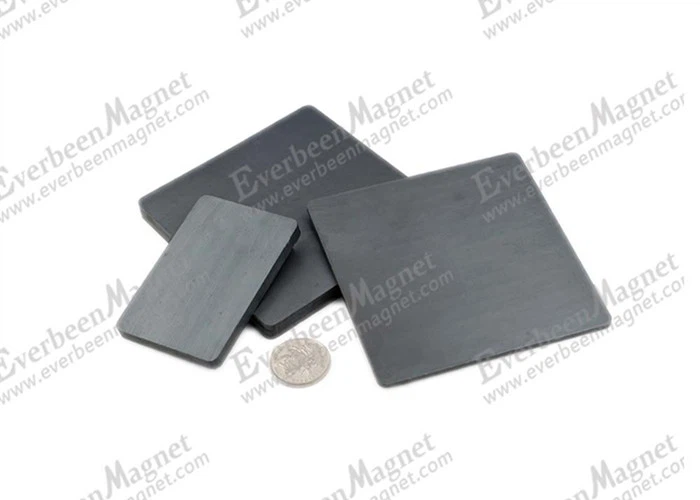
The advantage of pressing is that it can produce complex shapes with relatively high precision. However, the cost of creating the mold can be high, especially for small - batch production. Additionally, the shape complexity is limited by the design of the mold and the ability to remove the green magnet from the mold without damage.
Machining
Another way to customize the shape of ceramic magnets is through machining. Machining involves using cutting tools such as saws, grinders, and drills to remove material from a larger magnet block to achieve the desired shape. This method is suitable for making small - quantity custom parts or for modifying the shape of standard magnets.
However, machining ceramic magnets can be challenging due to their hardness and brittleness. Specialized tools and techniques are required to prevent cracking and chipping. The machining process also generates a significant amount of dust, which is a health hazard and requires proper dust collection and ventilation systems.
Limitations of Custom - Shaping
While it is possible to customize the shape of ceramic magnets, there are some limitations that need to be considered.
Material Properties
Ceramic magnets are hard and brittle, which makes them difficult to work with compared to other magnetic materials such as neodymium magnets. Complex shapes with sharp corners or thin sections are more prone to cracking during the manufacturing process. The magnetic properties can also be affected by the shaping process, especially if the magnet is subjected to excessive stress or heat.
Cost
Custom - shaping ceramic magnets can be expensive, especially for small - batch orders. The cost of creating the mold for pressing or the time and labor required for machining can significantly increase the overall cost of the magnets. For large - scale production, the cost per unit can be reduced, but for small - quantity custom orders, the cost may be prohibitive for some customers.
Applications of Custom - Shaped Ceramic Magnets
Despite the limitations, custom - shaped ceramic magnets have a wide range of applications. In the automotive industry, custom - shaped ceramic magnets are used in sensors and actuators. The unique shapes allow for better integration into the vehicle's design and improved performance.
In the electronics industry, custom - shaped ceramic magnets are used in speakers, headphones, and other audio devices. The specific shape of the magnet can affect the sound quality and the overall performance of the device.
Contact for Custom - Shaped Ceramic Magnets
If you have a specific application that requires custom - shaped ceramic magnets, I encourage you to reach out to discuss your requirements. Our team of experts has extensive experience in custom - shaping ceramic magnets, and we can provide you with the best solutions based on your needs. Whether you need a small - batch prototype or large - scale production, we are here to assist you in achieving the perfect shape for your ceramic magnets.
References
- "Permanent Magnet Materials and Their Applications" by B. D. Cullity and C. D. Graham.
- "Magnetism and Magnetic Materials" by David Jiles.