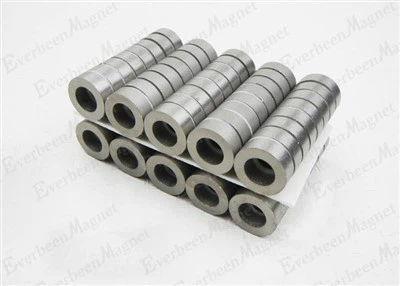
Samarium Cobalt Magnets

 
Why Choose Us?
 
01/

Expertise and Experience
20+ years of experience in the magnet industry, all our sales have 12+ years expertise and knowledge in various types of permanent magnets.

02/

Customization
Most of permanent magnets are customized according to drawing and requests.Be flexible in accommodating customer needs, whether it involves order adjustments, additional information, or other special requests.

03/

Diverse Product Range
Besides Neodymium magnet, we also provide Alnico magnet, Samarium Cobalt (SmCo) magnet, Ferrite(ceramic) magnet, Flexible magnet(Rubber magnet) and Magnetic Products.

04/

Quality Assurance
All magnets are under our strict quality control. We assure you what we offer is superior and quality products. From the beginning of the production to the inspection of finished goods, we pay attention to every detail and try our best to avoid any mistakes carefully.

05/

Effective Communication
Provide responsive and effective communication during the purchasing process, addressing any inquiries promptly and offering support to ensure a smooth transaction.

06/

Timely Delivery
15-30 days according to magnet order information.We promise timely delivery to ensure you receive the goods on time.


What Are Samarium Cobalt Magnets


Samarium cobalt magnets (also known as SmCo magnets), are extremely powerful permanent magnets. Part of the rare-earth magnet family, SmCo magnets rank similarly in strength to neodymium magnets but have much higher temperature stability and higher coercivity. They can operate at temperatures up to 525°F (300°C). In addition, they have a very high resistance to demagnetization and to corrosion. SmCo magnets are available in numerous shapes, sizes and grades that span a wide range of properties and application requirements.


Process of Samarium Cobalt Magnets


The production process of samarium cobalt magnets involves several phases, including raw material preparation, alloy formation, milling, pressing, sintering and finishing.


Raw materials: Samarium, a rare earth metal, and cobalt, a transition metal, are the primary components of SmCo magnets. SmCo alloy is created by combining these elements in precise proportions. A small amount of other materials are also used in the mixture. You can see which materials this is under Samarium Cobalt on our magnet facts page.


Alloying: At high temperatures, samarium and cobalt fuse together to form an alloy. The liquid metal is then rapidly cooled to form a solid ingot.
With the help of specialized milling equipment, the solid ingot is reduced to a fine powder. This substance is the raw material from which magnets are made.


Pressing: Using high-pressure presses, the SmCo material is compressed into the desired magnet shape. In this phase, a magnetic field is used to align the magnetic domains in the material, ensuring that the final magnet will have the desired magnetic properties.


Sintering: The pressed magnet is heated to high temperatures in a controlled atmosphere during the sintering procedure. This procedure fuses the individual components into a uniform and dense magnet.


Finishing: To achieve the desired dimensions and tolerances, the sintered magnet is ground, cut or machined. The magnet is then coated or plated to prevent corrosion and improve its appearance.


Sm2co17 Samarium Cobalt Magnet


Benefits of Samarium Cobalt Magnets

Samarium cobalt magnets are ideal for corrosive environments
Since samarium cobalt offers excellent corrosion resistance, these magnets typically do not require a surface treatment. They also have good resistance to external demagnetizing fields because of their high intrinsic coercive force (Hci). This resistance makes samarium cobalt rare earth magnets an excellent choice for demanding motor applications. They are available in three grades up to 32 MGOe.


Samarium cobalt operate at higher temperatures
Samarium cobalt magnets are one of the most useful magnets for high temperature applications. They retain most of their energy up to 575° F, making them ideal replacements for Alnico magnets when high temperature use or miniaturization is required. Samarium cobalt magnets are known for their excellent temperature stability—maximum use temperatures are between 250 and 550°F; Curie temperatures range from 700 to 800°F.


Samarium Cobalt Magnets Properties


Magnetic Strength
They have a superpower called "magnetic strength." Imagine picking up a whole bunch of paper clips with just one magnet.
Because of their strong magnetic force, SmCo magnets are inside many cool things we see around us.
You can find them in magnetic building blocks that stick together easily and in electric cars or toy trains because they can create powerful magnetic fields that make the motors spin fast.


Temperature Resistance
Samarium cobalt magnets can handle hot and cold temperatures without losing their magnetism. According to the samarium cobalt magnet datasheet, the Samarium cobalt magnet temperature limit is 350 degrees Celsius.
Their Curie temperature is 1098 K and the samarium cobalt density is 8.4 × 10³ kg/m3. Like superheroes who can handle extreme weather conditions, samarium cobalt magnets can handle extreme temperatures.
This makes samarium cobalt magnets perfect for places that can get hot or cold. For example, they are present in space missions and satellites where temperatures can be extreme. They can also be in the engines of airplanes, where they can get scorching.
Not only can samarium cobalt magnets handle hot temperatures, but they can also handle cold temperatures like a boss! That's why you might find them in refrigerators or even research labs where scientists study things.
Their solid magnetic force and ability to handle extreme temperatures help make many cool things possible.


What Are Samarium Cobalt Magnets Used For

Samarium cobalt magnets (SmCo magnets) are a crucial type of permanent magnet known for their high magnetic energy product and excellent magnetic stability. Their versatile applications contribute to various industries:


Electric Motors: The exceptional magnetic properties of samarium cobalt make it an ideal material for crafting efficient electric motors. These magnets not only enhance the power density of motors but also reduce their size and weight, thereby improving overall motor efficiency.


Sensors: Samarium cobalt magnets find utility in creating magnetic sensors. They enhance a sensor's sensitivity to external magnetic fields, thereby improving the sensor's responsiveness and accuracy.


Instruments and Gauges: Due to its high magnetic energy product and stable magnetization, samarium cobalt magnets are employed in the manufacturing of precision instruments and gauges.


Medical Devices: The heightened magnetic performance of samarium cobalt magnets is utilized in the fabrication of MRI (Magnetic Resonance Imaging) devices. These magnets contribute to creating a stronger and more stable magnetic field in MRI equipment, thereby enhancing imaging accuracy.

Samarium Cobalt Disc Magnets


Tolerance of Samarium Cobalt Magnet


For pressed materials, the tolerance on thickness (magnetization direction) is ±. 005. Other dimensions are ± 2.5% or ±. 010, whichever is greater.
In sintered metal magnets, visual defects such as fine line cracks, pores, and small chips are usually found. Notched edges are considered acceptable if no more than 10% of the surface is missing. Cracks are acceptable as long as they do not exceed 50% of the pole surface.


Two Series of Samarium Cobalt Magnets


Samarium cobalt magnets are available in two series,defined by the ratio of Samarium to Cobalt.The two alloy compositions SmCo5 and Sm2Co17,also known as 1/5 alloy or 2/17 alloy.


SmCo5 Magnets
SmCo5 magnets are composed of one atom of Samarium with five atoms of cobalt. By weight this magnet alloy will typically contain 37% samarium and 63% cobalt.The energy products of SmCo5 magnets range from 16 MGOe to 25 MGOe,that is approx. 128–200 kJ/m3. Their maximum recommended operating temperature is 250 degrees C.This series of magnet is easier to calibrate to a specific magnetic field than the Sm2Co17 magnets.


Sm2Co17 Magnets
Sm2Co17 magnets are composed of 2 atoms of samarium with 13-17 atoms of transition metals (TM).he TM content is rich in cobalt, but contains other elements such as iron and copper. By weight the alloy are made up of approximately 25% samarium,50% cobalt,18% iron,5% copper,2% hafnium or zirconium.Hafniun and zirconium are added to achieve better heat treatment response.The maximum energy products of these alloys range from 20 to 32 MGOe, that is approx. 160-260 kJ/m3.
Sm2Co17 is more stronger and more commonly used.But the iron content in Sm2Co17 means a risk of some surface corrosion when in water.However,plating,for example Ni coating could fix it.


How Does Temperature Affect Samarium Cobalt Magnets


Samarium cobalt magnets resist corrosion and retain most of their energy up to 575° Fahrenheit, making them ideal replacements for Alnico magnets when high temperature use or miniaturization is required. They have good temperature stability—maximum use temperatures are between 250 and 550°C, Curie temperatures range from 700 to 800°C.
They will work in applications that require the system to function at cryogenic (or very hot) temperatures—over 350°F or 180°C. In applications where performance is required to be consistent with temperature change, the flux density of a samarium cobalt magnet will vary under 5% per 100°C change in temperature (in the range of 25–250°C or 77-480°F). Rare earth sintered samarium cobalt magnets are extremely resistant to demagnetization and they can operate at temperatures up to 500°F (260°C).


Characteristics of Samarium Cobalt Magnets
 

Like their neodymium counterparts, samarium cobalt magnets possess extreme strength in a small size (although slightly less than neodymium). That is the hallmark of rare earth magnet. However, samarium cobalt magnets have other characteristics, including:

Reliable Performance

SmCo magnets are extremely resistant to demagnetization making them a reliable performer in many environments.

Corrosion Resistant

Thanks to having little iron in their composite, SmCo magnets have excellent corrosion resistance.

Temperature Stable

SmCo maintain their magnetic properties both at high temperatures (480-572 degrees F) and extremely low temperatures (-450 degrees F).

Brittle Material

As SmCo magnets are sintered, the material can be brittle. These magnets can chip easily if allowed to 'jump' at an attracting magnet or object. It's ideal to use these magnets in applications where direct, repeated contact won't occur.


Make Sure Samarium Cobalt Magnets Are Properly Stored


Storing your magnets in the correct fashion can strongly aid in the length of their lifespan. To get the most out of your magnets:


Store your magnets with a keeper – A keeper is a small piece of iron that is generally added temporarily between the north and south poles of a magnet. It prevents the magnet from demagnetising by redirecting its magnetic field.


Store your magnets in pairs – Keep magnets in pairs to avoid both north and south sides from touching. Both poles of the same alignment should never be allowed to touch, as this will cause the magnetic fields to repel and cause the magnets to weaken over time.


A dry place – Corrosion easily occurs to magnets that are stored in a damp environment. Corrosion will affect the strength of the magnets, especially if they rust, which causes an air gap. This will produce an insecure bond for ferromagnetic materials. Also, if magnets get wet, it can cause the laminate to bubble. If a magnet must be used in wet environments, make sure you're using a magnet designed for water, and that the magnet is dried and cleaned regularly.


Keep in a non-Ferromagnetic space – When storing multiple magnets, keep them in a non-ferromagnetic container. The container your magnets are stored in will help the magnet avoid attracting any undesirable metal debris.


Our Factory


Everbeen Magnet is located in Xiamen, a coastal city on the southeast coast of China. It has ocean shipping and air shipment ports leading to all over the world, with a developed economy and convenient logistics.
Everbeen Magnet specializes in the development and processing of various permanent magnet materials such as NdFeB,Ferrite magnets and accessories, electronic components, and magnetic application devices. We have been deeply involved in the field of permanent magnet materials for more than 20 years. We can Adopt sophisticated process management and high-quality services to meet customer needs, accurately provide cost-effective products.


productcate-1-1
productcate-1-1


Main Production Equipment


productcate-1-1
productcate-1-1
productcate-1-1
productcate-1-1
productcate-1-1
productcate-1-1


Quality Certificate


20240418160716548fb
productcate-1-1
productcate-1-1


FAQ


Q: What are the benefits of samarium cobalt magnets?

A: Samarium cobalt magnets are not as powerful as super-strong neodymium magnets but they have some significant advantages. Samarium cobalt magnets work over a wider temperature range, have superior temperature coefficients and have much greater corrosion resistance.

Q: How does temperature affect samarium cobalt magnets?

A: Samarium cobalt magnets are rare earth magnets made from samarium, cobalt, and other metallic rare earth materials. They have a high magnetic energy product, a very low-temperature coefficient, and a maximum operating temperature of 350°C. Although their maximum magnetic energy product (BHmax), coercivity, temperature stability, and chemical stability exceed those of the NdFeB magnets when the working temperature is above 180℃, the surrounding temperature still has an important influence on their performance.

Q: What grade is a samarium cobalt magnet?

A: The range of samarium cobalt magnet grades typically extends from 16 MGOe to 32 MGOe. This range allows for optimizing cost, performance, and operational temperature resistance.

Q: What is the curie temperature for samarium cobalt?

A: lthough the curie temperature for samarium cobalt material is between 700 and 800 ºC, currently alloy compositions can only be used up to maximum temperature between 250 and 350 ºC.

Q: How do you make a samarium cobalt magnet?

A: Firstly, the raw materials required to produce a samarium cobalt magnet are heated in an induction furnace filled with argon gas and melted to form the alloy material.
Next, the liquid alloy is then poured into moulds and cooled with water to form ingots.

Q: What is the grade of samarium cobalt magnets?

A: The range of samarium cobalt magnet grades typically extends from 16 MGOe to 32 MGOe. This range allows for optimizing cost, performance, and operational temperature resistance. There are two main types of Samarium Cobalt magnet alloy.

Q: What is the relative permeability of samarium cobalt?

A: Our range comprises a wide selection of various samarium cobalt materials with differing magnetic properties. They permit material selec- tion tailored to individual application requirements. We look for- ward to advising you in detail. * = Reduced temperature coefficient of Br The relative permeability (μp) is between 1.04–1.15.

Q: What is the meaning of samarium cobalt magnet?

A: Samarium cobalt samarium cobalt is the alternative Rare Earth magnet. It is often used in aerospace, automotive and military applications. It is usually weaker than NdFeB Neodymium at room temperature. Samarium Cobalt samarium cobalt is capable of use in extremes of cold and heat.

Q: How to measure samarium cobalt magnet magnetic permeability?

A: There are several methods for testing magnetic permeability, but the most common method is the magnetic balance method, also known as the Gouy method. The magnetic balance method involves suspending a sample of the material to be tested in a magnetic field and measuring the force exerted on the sample by the field.

Q: What is the permeability of samarium cobalt magnet?

A: Magnetic permeability is the characteristic of a material which represents the establishment of an induced internal magnetic field by an external magnetic field. The magnetic permeability is the proportionality between the induced field and the applied magnetic field strength.

Q: What are samarium cobalt magnets used for?

A: They are routinely used in high-performance motors, machinery, pumps, medical devices, magnetic couplings, magnetic separators and other equipment for automotive, aerospace, medical, military and industrial automation industries.

Q: How strong are samarium cobalt magnets?

A: Samarium–cobalt magnets have maximum energy products (BHmax) that range from 14 megagauss-oersteds (MG·Oe) to 33 MG·Oe, that is approx. 112 kJ/m3 to 264 kJ/m3; their theoretical limit is 34 MG·Oe, about 272 kJ/m3.

Q: How are samarium cobalt magnets made?

A: Samarium cobalt magnets have been produced for over 40 years. A number of common manufacturing processes can be used to produce samarium cobalt magnets but typically, a method of reduction and melting is used followed by a process of bonding or sintering the raw material to form the magnet.

Q: Why do we have to take care while storing the samarium cobalt magnets?

A: When magnets are kept for a long time leaving the magnetic poles free or exposed, they slowly lose their magnetic properties. Therefore, magnets have to be preserved to prevent the loss of magnetic properties.

Q: What is the temperature coefficient of samarium cobalt?

A: Samarium cobalt magnets can operate in temperatures up to 300°C. The temperature coefficient for Samarium Cobalt is approximately -0.04% per degree C rise in temperature and this loss is fully recovered if the maximum operating temperature is not exceeded.

Q: What is the maximum temperature for samarium cobalt magnets?

A: Samarium cobalt magnets are rare earth magnets made from samarium, cobalt, and other metallic rare earth materials. They have a high magnetic energy product, a very low-temperature coefficient, and a maximum operating temperature of 350°C.

Q: What happens if samarium cobalt magnet touches electricity?

A: Samarium cobalt magnet exerts a force on current-carrying wire. This simple device shows that when an electrical current flows through a samarium cobalt magnetic field, a force is exerted on the current. This force can be used to make an electric motor.

Q: Does stacking samarium cobalt magnets make them stronger?

A: By adding one samarium cobalt magnet on to the other, e.g. stacking, the stacked samarium cobalt magnets will work as one bigger samarium cobalt magnet and will exert a greater samarium cobalt magnetic performance. As more samarium cobalt magnets are stacked together, the strength will increase until the length of the stack is equal to the diameter.

Q: Where are samarium cobalt magnets used?

A: Samarium cobalt magnets, because of their characteristics are most commonly used in applications which require high operating temperatures such as generators, pump couplings, sensors, motors, marine applications and in the automotive, aerospace, military and food and manufacturing industries.

Q: How strong are samarium cobalt magnets?

A: Samarium–cobalt magnets have maximum energy products (BHmax) that range from 14 megagauss-oersteds (MG·Oe) to 33 MG·Oe, that is approx. 112 kJ/m3 to 264 kJ/m3; their theoretical limit is 34 MG·Oe, about 272 kJ/m3.

As one of the most professional samarium cobalt magnets manufacturers and suppliers in China, we're featured by quality products and good service. Please rest assured to buy customized samarium cobalt magnets at competitive price from our factory.

magnetic toner, metalworking machine magnet, magnetic relaxation

(0/10)

clearall