

How does the external magnetic field affect the performance of Sm2Co17 magnet?
Jan 07, 2026
As a supplier of Sm2Co17 magnets, I've witnessed firsthand the growing interest in these high - performance permanent magnets across various industries. One question that often arises from our customers is how an external magnetic field affects the performance of Sm2Co17 magnets. In this blog, I'll delve into this topic, sharing both theoretical knowledge and practical insights based on our experiences.
Understanding Sm2Co17 Magnets
Sm2Co17 magnets, also known as samarium - cobalt magnets of the 2:17 type, are part of the rare - earth magnet family. They are renowned for their excellent thermal stability, high coercivity, and strong magnetic properties. These magnets can maintain their magnetic performance at elevated temperatures, making them suitable for applications in harsh environments such as aerospace, automotive, and high - tech industrial equipment.
The basic structure of Sm2Co17 magnets consists of a crystal lattice where samarium (Sm) and cobalt (Co) atoms are arranged in a specific pattern. The magnetic properties of these magnets are determined by the alignment of the magnetic moments of the atoms within the lattice. This alignment is responsible for the strong magnetic field they generate.
Effects of External Magnetic Fields on Sm2Co17 Magnets
1. Demagnetization
One of the most significant effects of an external magnetic field on Sm2Co17 magnets is demagnetization. When an external magnetic field is applied in the opposite direction to the magnetization of the Sm2Co17 magnet, it can disrupt the alignment of the magnetic moments within the magnet. If the strength of the external magnetic field exceeds the coercivity of the Sm2Co17 magnet, partial or complete demagnetization can occur.
Coercivity is a measure of a magnet's resistance to demagnetization. Sm2Co17 magnets typically have high coercivity values, which means they can withstand relatively strong external magnetic fields without significant demagnetization. However, in extreme cases, such as exposure to a very strong reverse magnetic field or repeated exposure to moderate reverse fields, the magnet's performance can degrade over time.
For example, in some electrical motors, the armature current can generate an external magnetic field that opposes the magnetic field of the Sm2Co17 magnets used in the motor. If the motor is not properly designed to account for this, the Sm2Co17 magnets may experience partial demagnetization, leading to a decrease in motor efficiency and performance.
2. Magnetic Saturation
Another effect of an external magnetic field is magnetic saturation. When an external magnetic field is applied in the same direction as the magnetization of the Sm2Co17 magnet, the magnet's magnetic flux density can increase up to a certain point. This point is called the saturation magnetization.
Once the Sm2Co17 magnet reaches saturation, further increases in the external magnetic field will not result in a significant increase in the magnet's magnetic flux density. In practical applications, magnetic saturation can limit the performance of devices that rely on the magnetic field of the Sm2Co17 magnet. For instance, in magnetic sensors, if the external magnetic field causes the Sm2Co17 magnet to reach saturation, the sensor may lose its ability to accurately detect changes in the magnetic field.
3. Magnetic Interaction and Torque
External magnetic fields can also create magnetic interactions and torques on Sm2Co17 magnets. When a Sm2Co17 magnet is placed in an external magnetic field, it experiences a force and a torque that tend to align the magnet's magnetization with the direction of the external field.
This effect is utilized in many applications, such as magnetic bearings and magnetic actuators. In magnetic bearings, the interaction between the Sm2Co17 magnets and the external magnetic field generated by the bearing coils provides a non - contact support for rotating shafts, reducing friction and wear. However, in some cases, these magnetic interactions can also cause unwanted vibrations or misalignments if not properly controlled.
Factors Influencing the Response to External Magnetic Fields
1. Magnet Composition and Structure
The composition and structure of Sm2Co17 magnets play a crucial role in their response to external magnetic fields. Minor variations in the ratio of samarium to cobalt, as well as the presence of other alloying elements, can affect the magnet's coercivity, saturation magnetization, and other magnetic properties.
For example, adding small amounts of elements such as iron (Fe) or copper (Cu) to the Sm2Co17 alloy can improve the magnet's coercivity and thermal stability. Additionally, the manufacturing process, such as the sintering temperature and time, can also influence the magnet's microstructure and, consequently, its response to external magnetic fields.

2. Temperature
Temperature is another important factor. As the temperature increases, the coercivity of Sm2Co17 magnets generally decreases. This means that at higher temperatures, the magnets are more susceptible to demagnetization by external magnetic fields.
However, Sm2Co17 magnets still have better thermal stability compared to other types of permanent magnets, such as neodymium - iron - boron (NdFeB) magnets. This makes them a preferred choice for applications where high - temperature operation is required, such as in aerospace engines or high - power electrical generators.
Practical Considerations for Applications
When using Sm2Co17 magnets in applications where they will be exposed to external magnetic fields, several practical considerations should be taken into account.
1. Design Optimization
In the design of devices using Sm2Co17 magnets, it is essential to optimize the magnetic circuit to minimize the impact of external magnetic fields. This may involve using magnetic shielding materials to protect the magnets from unwanted external fields or designing the device in such a way that the external magnetic fields are aligned with the magnetization of the magnets.
For example, in a magnetic sensor, the placement of the Sm2Co17 magnet and the surrounding magnetic shielding can be carefully designed to ensure that the sensor is sensitive only to the desired magnetic fields and is protected from interference.
2. Quality Control
As a supplier, we pay close attention to quality control to ensure that our Sm2Co17 magnets have consistent and reliable performance. We conduct rigorous testing on each batch of magnets to measure their magnetic properties, including coercivity, remanence, and saturation magnetization.
By providing high - quality Sm2Co17 magnets, we can help our customers minimize the risk of performance degradation due to external magnetic fields. We also offer technical support to our customers, assisting them in selecting the right magnets for their specific applications and providing advice on how to handle and install the magnets to optimize their performance.
Our Product Range
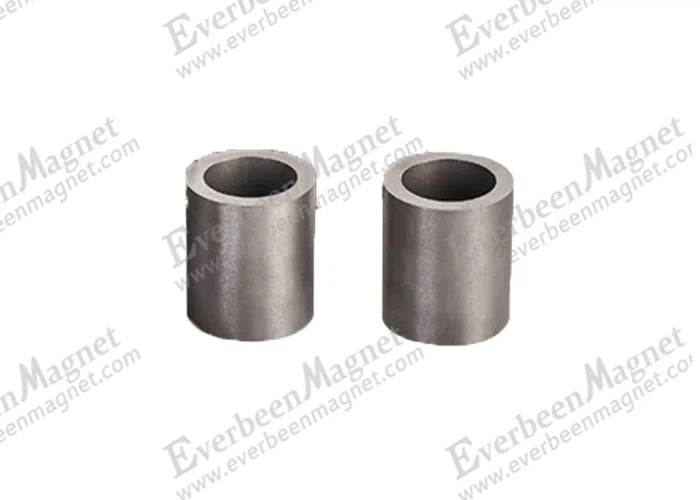
At our company, we offer a wide range of Sm2Co17 magnets, including Smco Ring Magnet and Smco Rod Magnets. These magnets are available in various sizes and grades to meet the diverse needs of our customers.
Our Smco Ring Magnets are commonly used in applications such as magnetic couplings, motors, and sensors. They provide a uniform magnetic field around the ring, making them suitable for applications where a circular magnetic field is required. Our Smco Rod Magnets, on the other hand, are often used in magnetic actuators, magnetic separators, and other linear - motion applications.
Conclusion
In conclusion, the external magnetic field can have significant effects on the performance of Sm2Co17 magnets, including demagnetization, magnetic saturation, and magnetic interaction. Understanding these effects and the factors that influence them is crucial for the successful application of Sm2Co17 magnets in various industries.
As a reliable supplier of Sm2Co17 magnets, we are committed to providing high - quality products and excellent technical support. If you are interested in our Sm2Co17 magnets or have any questions about how they perform in the presence of external magnetic fields, please feel free to contact us for further discussion and potential procurement. We look forward to working with you to meet your specific magnetic needs.
References
- Liu, J., & Chen, X. (2018). Rare - Earth Permanent Magnets: Principles and Applications. Springer.
- Buschow, K. H. J. (2007). Magnetism and Magnetic Materials. Institute of Physics Publishing.
- Li, Y., & Wang, Z. (2015). Advances in Samarium - Cobalt Permanent Magnets. Journal of Magnetism and Magnetic Materials, 382, 1 - 11.