

What are the magnetic properties of Sm2Co17 magnet in different magnetic fields?
Nov 20, 2025
Hey there! As a supplier of Sm2Co17 magnets, I've had my fair share of experiences and insights into these fascinating little pieces of tech. Today, I'm gonna dive into the magnetic properties of Sm2Co17 magnets in different magnetic fields.
First off, let's get a bit of the basics down. Sm2Co17 magnets, also known as samarium - cobalt magnets, are part of the rare - earth magnet family. They're super popular due to their high energy product, excellent temperature stability, and corrosion resistance. These magnets are used in a wide range of applications, from aerospace to medical devices, and even in some high - end consumer electronics.
Magnetic Properties in Low Magnetic Fields
In low magnetic fields, Sm2Co17 magnets show some really interesting behavior. The magnetization process starts gradually. At the beginning, the magnetic domains within the magnet start to align with the external magnetic field. These domains are like tiny magnets within the larger magnet, and when they align, they contribute to the overall magnetization of the magnet.
The initial magnetization curve in a low - field region is relatively gentle. The magnet doesn't reach its saturation magnetization right away. Saturation magnetization is the maximum amount of magnetization a magnet can achieve. In low fields, the magnet is still building up its magnetization as more and more domains align.
One of the great things about Sm2Co17 magnets in low fields is their high coercivity. Coercivity is the ability of a magnet to resist demagnetization. Even in a low external field, the domains in Sm2Co17 magnets don't easily flip back to their random orientations. This means that once a certain level of magnetization is achieved in a low - field environment, it tends to stay that way. This property makes Sm2Co17 magnets ideal for applications where a stable magnetic field is required in a relatively weak external field, like in some types of sensors.
Performance in Medium Magnetic Fields
As we move into medium magnetic fields, things start to get more exciting. The magnetization of the Sm2Co17 magnet increases more rapidly. More and more magnetic domains align with the external field, and the magnet gets closer and closer to its saturation magnetization.
In medium fields, the magnet's energy product also starts to play a significant role. The energy product is a measure of the magnet's ability to store magnetic energy. It's calculated by multiplying the magnetic field strength (B) and the magnetic field intensity (H). In medium magnetic fields, the energy product of Sm2Co17 magnets is quite high, which means they can store a large amount of magnetic energy.
This high energy product in medium fields makes Sm2Co17 magnets suitable for applications such as electric motors. In an electric motor, the magnet needs to generate a strong magnetic field to interact with the electric current and produce mechanical motion. The high energy product in medium fields allows the motor to operate more efficiently.
Another important aspect in medium fields is the temperature stability of Sm2Co17 magnets. These magnets can maintain their magnetic properties over a wide range of temperatures. In medium - field applications where there might be some heat generated, like in motors or generators, the temperature stability of Sm2Co17 magnets ensures that the performance doesn't degrade significantly.
Behavior in High Magnetic Fields
When we talk about high magnetic fields, Sm2Co17 magnets really shine. In high fields, the magnet quickly reaches its saturation magnetization. Once saturated, the magnet has all its magnetic domains perfectly aligned with the external field, and it can't be magnetized any further.
In high - field applications, the remanence of the magnet becomes crucial. Remanence is the magnetic field that remains in the magnet after the external magnetic field is removed. Sm2Co17 magnets have a relatively high remanence, which means they can hold a strong magnetic field even when the external field is no longer present.
This property is extremely useful in applications like magnetic separators. In a magnetic separator, the magnet needs to attract and hold magnetic particles. The high remanence of Sm2Co17 magnets allows them to effectively capture and retain these particles even after the initial high - field magnetization process.
However, in very high magnetic fields, there is a limit to the magnet's performance. If the external field is too strong, it can start to cause some of the magnetic domains to reverse their orientation, leading to a decrease in the magnet's magnetization. But this usually requires an extremely high - field strength that is not commonly encountered in most applications.

Our Product Range
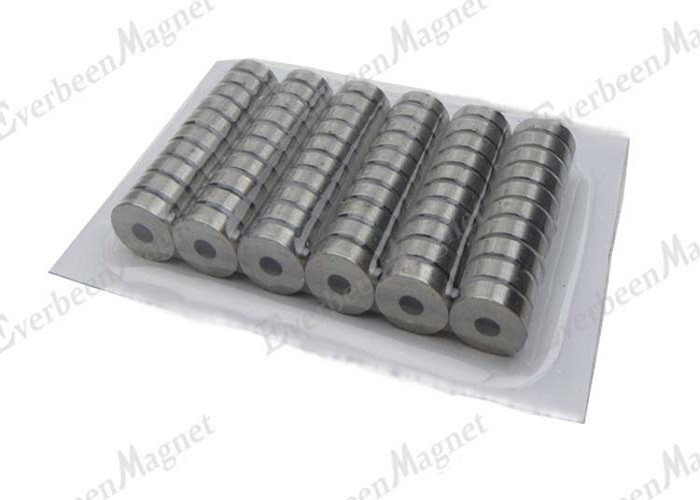
We offer a variety of Sm2Co17 magnet products to meet different customer needs. For instance, we have Smco Ring Magnet. These ring - shaped magnets are great for applications where a circular magnetic field is required, like in some types of sensors or actuators. The shape allows for a more focused and controlled magnetic field distribution.
We also have Smco Rod Magnets. Rod magnets are commonly used in applications where a linear magnetic field is needed. They can be used in magnetic couplings, magnetic resonance imaging (MRI) machines, and many other devices.
Why Choose Our Sm2Co17 Magnets
Our Sm2Co17 magnets are made with high - quality materials and advanced manufacturing processes. We ensure that each magnet meets strict quality standards. Whether you need a magnet for a low - field sensor application or a high - field magnetic separator, we can provide you with the right product.
We also offer custom - made solutions. If you have specific requirements in terms of size, shape, or magnetic properties, our team of experts can work with you to develop a magnet that fits your exact needs.
Let's Connect
If you're interested in learning more about our Sm2Co17 magnets or have a project that requires these amazing magnets, don't hesitate to reach out. We're always happy to have a chat and see how we can help you with your magnetic needs. Whether it's a small - scale research project or a large - scale industrial application, we've got the expertise and the products to support you.
References
- Handbook of Magnetic Materials, edited by K. H. J. Buschow
- "Magnetic Properties and Applications of Rare - Earth Magnets" by R. C. O'Handley
- Journal of Applied Physics articles on samarium - cobalt magnets