

What is the chemical composition of ferrite disc magnets?
May 22, 2025
Ferrite disc magnets are a type of permanent magnet that have been widely used in various industries due to their unique properties and cost - effectiveness. As a supplier of ferrite disc magnets, I am often asked about their chemical composition. In this blog, I will delve into the chemical makeup of ferrite disc magnets, explaining what elements they consist of and how these components contribute to the magnets' characteristics.
The Basics of Ferrite Magnets
Ferrite magnets, also known as ceramic magnets, are made from a combination of iron oxide (Fe₂O₃) and one or more other metallic elements. The term "ferrite" refers to a class of chemical compounds with the general formula MFe₂O₄, where M represents a divalent metal ion such as barium (Ba), strontium (Sr), or sometimes lead (Pb).
Iron Oxide: The Core Component
Iron oxide is the primary ingredient in ferrite disc magnets, typically making up a large proportion of the magnet's composition. It is the iron atoms within the iron oxide that are responsible for the magnetic properties of the ferrite magnet.
Iron has four unpaired electrons in its outer shell, which gives it a strong magnetic moment. When iron oxide is combined with other elements to form a ferrite structure, these iron atoms align in a way that creates a net magnetic field. The most common form of iron oxide used in ferrite magnets is hematite (α - Fe₂O₃), which is a stable and abundant mineral.
The high availability of iron oxide makes ferrite magnets relatively inexpensive compared to other types of permanent magnets, such as neodymium magnets. This cost - effectiveness is one of the main reasons why ferrite disc magnets are so popular in many applications.
Barium and Strontium Ferrite
The two most common types of ferrite disc magnets are barium ferrite and strontium ferrite.
Barium Ferrite
Barium ferrite magnets have the chemical formula BaFe₁₂O₁₉. In these magnets, barium ions (Ba²⁺) are incorporated into the crystal structure of the iron oxide. The barium ions help to stabilize the magnetic domains within the magnet, allowing the magnet to maintain its magnetic properties over time.
Barium ferrite magnets are known for their high coercivity, which means they are resistant to demagnetization. This makes them suitable for applications where the magnet needs to maintain its magnetic field in the presence of external magnetic fields or mechanical stress. For example, barium ferrite magnets are often used in motors, generators, and magnetic separators.
Strontium Ferrite
Strontium ferrite magnets have the chemical formula SrFe₁₂O₁₉. Similar to barium ferrite, strontium ions (Sr²⁺) are integrated into the iron oxide crystal lattice. Strontium ferrite magnets generally have better magnetic properties than barium ferrite magnets, such as higher remanence (the magnetic field remaining in the magnet after the external magnetic field is removed) and energy product (a measure of the magnet's strength).
Strontium ferrite magnets are widely used in various applications, including speakers, magnetic couplings, and magnetic sensors. They are also popular in the automotive industry for applications such as anti - lock braking systems (ABS) and electric power steering.
Other Elements and Additives
In addition to the main components (iron oxide and barium or strontium), ferrite disc magnets may contain small amounts of other elements or additives. These additives are used to modify the magnetic properties of the magnet or to improve its manufacturing process.
For example, small amounts of calcium (Ca), silicon (Si), or aluminum (Al) may be added to the ferrite composition. Calcium can help to improve the sintering process, which is the process of heating the magnet material to form a solid mass. Silicon and aluminum can be used to adjust the magnetic properties of the magnet, such as increasing the coercivity or reducing the eddy current losses.

The Manufacturing Process and Chemical Composition
The chemical composition of ferrite disc magnets is closely related to their manufacturing process. The production of ferrite disc magnets typically involves the following steps:
- Raw Material Preparation: The raw materials, including iron oxide, barium or strontium carbonate, and other additives, are carefully weighed and mixed in the correct proportions. This step is crucial to ensure the desired chemical composition of the final magnet.
- Calcination: The mixed raw materials are heated at a high temperature (usually around 1000 - 1300°C) to form a pre - sintered powder. During this process, chemical reactions occur between the components, and the crystal structure of the ferrite begins to form.
- Milling: The pre - sintered powder is then milled into a fine powder to reduce the particle size. This step helps to improve the magnetic properties of the final magnet by increasing the surface area of the particles and promoting better alignment during the subsequent forming process.
- Forming: The milled powder is pressed into the desired shape, in this case, a disc shape. This can be done using various methods, such as dry pressing or wet pressing.
- Sintering: The pressed magnet is heated again at a high temperature (usually around 1200 - 1350°C) to densify the material and complete the formation of the ferrite crystal structure. The sintering process is critical for achieving the desired magnetic properties and mechanical strength of the magnet.
- Machining and Finishing: After sintering, the magnet may be machined to achieve the required dimensions and surface finish. This can involve grinding, drilling, or other machining operations.
Applications and the Importance of Chemical Composition
The chemical composition of ferrite disc magnets directly affects their magnetic properties, which in turn determine their suitability for different applications.
For example, in Grade 5 Ceramic Disc Magnets, the specific chemical composition is carefully optimized to provide a good balance of magnetic strength, coercivity, and cost. These magnets are commonly used in consumer electronics, such as speakers and motors, where a relatively strong magnetic field is required at a reasonable cost.
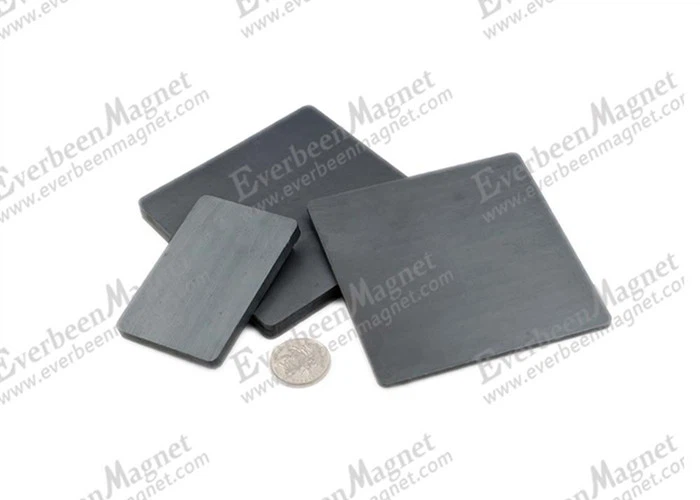
Ferrite Block Magnets also have a similar chemical base but may be tailored for different applications. Their larger size and different shape make them suitable for applications such as magnetic separators in the mining industry or in some industrial machinery.
The Ceramic Magnet Grades are defined based on their magnetic properties, which are ultimately determined by their chemical composition. Different grades are available to meet the diverse needs of various industries, from low - cost applications where moderate magnetic strength is sufficient to high - performance applications where stronger magnetic fields are required.
Conclusion
In conclusion, the chemical composition of ferrite disc magnets is a complex combination of iron oxide, barium or strontium, and sometimes other additives. The specific composition determines the magnetic properties of the magnet, such as its coercivity, remanence, and energy product. These properties, in turn, make ferrite disc magnets suitable for a wide range of applications in various industries.
As a supplier of ferrite disc magnets, I understand the importance of providing high - quality magnets with the right chemical composition for each customer's specific needs. Whether you are looking for Grade 5 Ceramic Disc Magnets for your consumer electronics project or Ferrite Block Magnets for industrial use, I can offer a range of products with different chemical compositions and magnetic properties.
If you are interested in purchasing ferrite disc magnets or have any questions about their chemical composition and applications, please feel free to contact me for further discussion and procurement negotiation.
References
- Cullity, B. D., & Graham, C. D. (2008). Introduction to Magnetic Materials. Wiley - Interscience.
- O'Handley, R. C. (2000). Modern Magnetic Materials: Principles and Applications. Wiley - Interscience.
- Strnat, K. J. (1993). Handbook of Magnetic Materials. North - Holland.