

What is the thermal expansion coefficient of Sm2Co17 magnet?
May 27, 2025
As a supplier of Sm2Co17 magnets, I often encounter inquiries from customers about various technical aspects of these high - performance magnets. One question that comes up quite frequently is, "What is the thermal expansion coefficient of Sm2Co17 magnet?" In this blog, I will delve into this topic in detail, providing you with a comprehensive understanding of the thermal expansion coefficient of Sm2Co17 magnets and its implications in different applications.
Understanding the Basics of Sm2Co17 Magnets
Sm2Co17 magnets, also known as samarium - cobalt magnets of the 2:17 type, are a class of rare - earth permanent magnets. They are renowned for their excellent magnetic properties, including high coercivity, high remanence, and outstanding temperature stability. These magnets are composed of samarium (Sm), cobalt (Co), and sometimes other elements such as iron (Fe), copper (Cu), and zirconium (Zr). The unique combination of these elements gives Sm2Co17 magnets their superior performance characteristics, making them suitable for a wide range of applications, from aerospace and defense to high - tech consumer electronics.

What is the Thermal Expansion Coefficient?
The thermal expansion coefficient is a physical property that describes how a material changes in size or volume in response to a change in temperature. It is defined as the fractional change in length or volume per unit change in temperature. There are two main types of thermal expansion coefficients: the linear thermal expansion coefficient (α) and the volumetric thermal expansion coefficient (β).
The linear thermal expansion coefficient (α) is used to describe the change in length of a material. It is calculated using the formula:
α=(ΔL/L₀)/ΔT
where ΔL is the change in length, L₀ is the original length, and ΔT is the change in temperature.
The volumetric thermal expansion coefficient (β) is used to describe the change in volume of a material. For isotropic materials, β ≈ 3α.
Thermal Expansion Coefficient of Sm2Co17 Magnets
The thermal expansion coefficient of Sm2Co17 magnets is relatively low compared to many other materials. The linear thermal expansion coefficient of Sm2Co17 magnets typically ranges from about 5×10⁻⁶ /°C to 10×10⁻⁶ /°C in the temperature range of - 20°C to 200°C. This low thermal expansion coefficient is one of the key factors contributing to the excellent temperature stability of Sm2Co17 magnets.
The low thermal expansion coefficient means that Sm2Co17 magnets experience minimal dimensional changes when subjected to temperature variations. This is crucial in applications where precise dimensions and stable magnetic performance are required. For example, in aerospace applications, where components are exposed to extreme temperature changes during flight, the low thermal expansion of Sm2Co17 magnets ensures that the magnetic devices maintain their accuracy and reliability.
Implications of the Thermal Expansion Coefficient in Applications
Aerospace and Defense
In aerospace and defense applications, Sm2Co17 magnets are used in various components such as actuators, sensors, and motors. The low thermal expansion coefficient of these magnets is essential for maintaining the integrity and performance of these components under extreme temperature conditions. For instance, in a satellite's attitude control system, the magnetic actuators need to operate precisely over a wide temperature range. The low thermal expansion of Sm2Co17 magnets ensures that the magnetic field remains stable, allowing for accurate control of the satellite's orientation.
High - Tech Consumer Electronics
In high - tech consumer electronics, such as smartphones and laptops, Sm2Co17 magnets are used in speakers, microphones, and vibration motors. The low thermal expansion coefficient helps to prevent dimensional changes that could affect the performance of these components. For example, in a smartphone speaker, any significant change in the dimensions of the magnet due to temperature variations could lead to changes in the sound quality. The low thermal expansion of Sm2Co17 magnets ensures consistent audio performance.
Industrial Automation
In industrial automation, Sm2Co17 magnets are used in servo motors, magnetic couplings, and sensors. The stable dimensions of these magnets due to their low thermal expansion coefficient are crucial for maintaining the accuracy and efficiency of the automated systems. For example, in a servo motor, precise control of the magnetic field is required for accurate positioning. The low thermal expansion of Sm2Co17 magnets helps to ensure that the motor operates smoothly and accurately over a wide temperature range.
Our Sm2Co17 Magnet Products
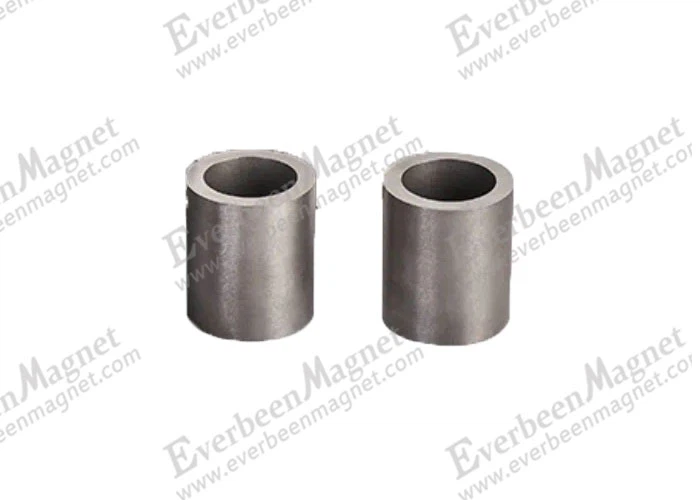
As a supplier of Sm2Co17 magnets, we offer a wide range of products to meet the diverse needs of our customers. Our product portfolio includes Smco Ring Magnet and Smco Rod Magnets.
Our Smco Ring Magnets are available in various sizes and grades, with precise dimensions and excellent magnetic properties. They are suitable for applications such as magnetic couplings, sensors, and electric motors. Our Smco Rod Magnets, on the other hand, are known for their high magnetic strength and good temperature stability. They are commonly used in aerospace, defense, and high - tech consumer electronics applications.
Conclusion
In conclusion, the thermal expansion coefficient of Sm2Co17 magnets is an important property that significantly affects their performance in various applications. The low thermal expansion coefficient of these magnets ensures stable dimensions and reliable magnetic performance over a wide temperature range. As a supplier of Sm2Co17 magnets, we are committed to providing high - quality products that meet the strict requirements of our customers. Whether you are in the aerospace, defense, consumer electronics, or industrial automation industry, our Sm2Co17 magnets can offer you the performance and reliability you need.
If you are interested in our Sm2Co17 magnet products or have any questions about the thermal expansion coefficient or other technical aspects, please feel free to contact us for a procurement discussion. We look forward to working with you to meet your specific magnet requirements.
References
- Cullity, B. D., & Graham, C. D. (2008). Introduction to Magnetic Materials. Wiley - Interscience.
- Buschow, K. H. J. (1998). Handbook of Magnetic Materials. Elsevier.
- Liu, J. F., & Chen, X. H. (2011). Rare - Earth Permanent Magnets: Science, Technology, and Applications. Springer.