

What raw materials are needed to make Sm2Co17 magnet?
Jun 25, 2025
Hey there! As a supplier of Sm2Co17 magnets, I often get asked about the raw materials needed to make these powerful little wonders. So, I thought I'd put together a blog post to break it all down for you.
The Basics of Sm2Co17 Magnets
Before we dive into the raw materials, let's quickly go over what Sm2Co17 magnets are. These are a type of rare - earth magnet, known for their high magnetic energy product, excellent temperature stability, and corrosion resistance. They're used in a wide range of applications, from aerospace and defense to medical devices and high - end consumer electronics.
Samarium (Sm)
The first and most crucial raw material for Sm2Co17 magnets is samarium. Samarium is a rare - earth element, which means it's not as abundant as other elements on Earth. It has atomic number 62 and is part of the lanthanide series.
Samarium plays a vital role in the magnetic properties of Sm2Co17 magnets. It contributes to the high coercivity and magnetic anisotropy of the magnet. Coercivity is the ability of a magnet to resist demagnetization, and magnetic anisotropy means that the magnet has a preferred direction of magnetization.
The source of samarium is usually rare - earth ore deposits. These deposits are mined in various parts of the world, with China being one of the major producers. Once the ore is mined, it goes through a series of chemical processes to extract pure samarium.
Cobalt (Co)
Cobalt is another essential raw material for Sm2Co17 magnets. It's a transition metal with atomic number 27. Cobalt provides the necessary structure and stability to the magnet. It helps in forming the crystal lattice structure of the Sm2Co17 compound, which is crucial for its magnetic properties.
Cobalt is also mined from ore deposits. Some of the major cobalt - producing countries include the Democratic Republic of the Congo, Russia, and Canada. The mining and processing of cobalt are complex and often involve multiple steps to obtain high - purity cobalt suitable for magnet production.
Other Elements
In addition to samarium and cobalt, Sm2Co17 magnets may also contain small amounts of other elements. These elements are added to enhance specific properties of the magnet.

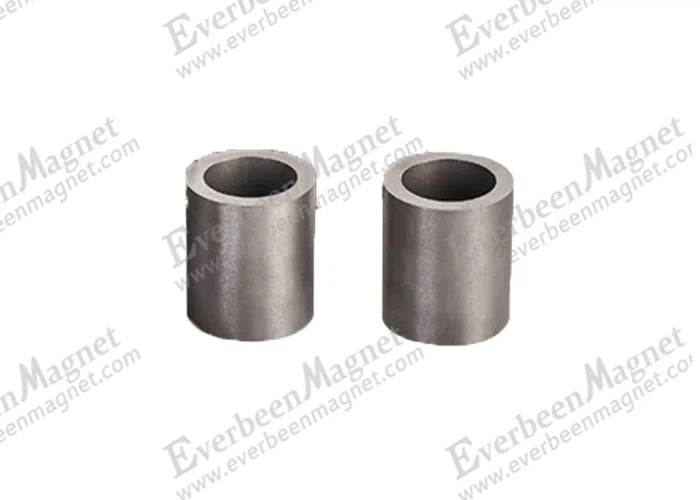
- Iron (Fe): Iron is sometimes added to improve the magnetic performance of the magnet. It can increase the saturation magnetization of the magnet, which means that the magnet can achieve a higher magnetic field strength.
- Copper (Cu): Copper is used to improve the coercivity and thermal stability of the magnet. It helps in reducing the grain size of the magnet, which in turn enhances its resistance to demagnetization at high temperatures.
- Zirconium (Zr): Zirconium is added to control the microstructure of the magnet. It can help in improving the mechanical properties of the magnet and also has a positive effect on its magnetic properties.
The Manufacturing Process
Once all the raw materials are obtained, the manufacturing process of Sm2Co17 magnets begins. First, the raw materials are weighed in the correct proportions and then melted together in a high - temperature furnace. This forms an alloy of Sm2Co17.
After melting, the alloy is rapidly cooled to form a fine - grained powder. This powder is then pressed into the desired shape, such as a Smco Rod Magnets or a Smco Ring Magnet. The pressing is usually done in the presence of a magnetic field to align the magnetic domains of the powder particles in the preferred direction.
Next, the pressed magnet is sintered at a high temperature to densify it and improve its mechanical strength. After sintering, the magnet may undergo additional heat treatment processes to optimize its magnetic properties. Finally, the magnet is machined to the exact dimensions and surface finish required by the customer.
Why Choose Our Sm2Co17 Magnets
As a supplier of Sm2Co17 magnets, we take pride in offering high - quality products. We source our raw materials from reliable suppliers to ensure the consistency and performance of our magnets. Our manufacturing process is carefully controlled to meet the strictest quality standards.
We also offer a wide range of shapes and sizes of Sm2Co17 magnets to meet the diverse needs of our customers. Whether you need a small, custom - shaped magnet for a medical device or a large magnet for an industrial application, we've got you covered.
Let's Talk
If you're in the market for Sm2Co17 magnets, I'd love to have a chat with you. Whether you have questions about the raw materials, the manufacturing process, or just need some advice on which magnet is right for your application, feel free to reach out. We're here to help you find the best solution for your needs.
References
- "Handbook of Magnetic Materials"
- "Rare Earth Metals: Science, Technology, Production and Use"