


How The Development Of New Technologies Has Made Breakthroughs In The Application Of Alnico Magnets
Jun 12, 2025
As one of the earliest developed permanent magnet materials, AlNiCo magnets have been widely used in industrial and consumer fields over the past 80 years due to their high remanence, excellent temperature stability and corrosion resistance. Although new magnets such as neodymium iron boron (NdFeB) and ferrites have occupied most of the market in recent years, AlNiCo is still irreplaceable in certain scenarios. The following analysis spans two dimensions from daily life applications and new technologies:
1. Application of AlNiCo magnets in daily life
Traditional electrical appliances and instruments
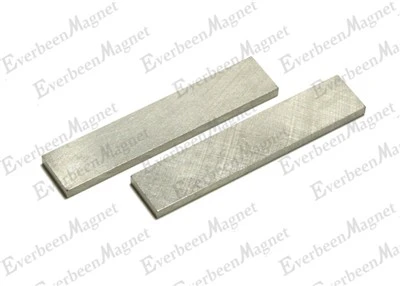
Electroacoustic equipment: AlNiCo (especially anisotropic AlNiCo 5) is often used in old speakers, telephone handsets and microphones because its linear magnetic permeability can provide more natural sound quality, and some high-end audio equipment still retains its use.
Meters and sensors: The magnetic coupling system of household gas meters and water meters relies on the stability of AlNiCo to avoid measurement errors caused by temperature fluctuations.
Motor field: Small DC motors such as automotive wiper motors and sewing machine motors have widely used AlNiCo because of its low risk of demagnetization in high temperature environments.
Household tools and decorations
Magnetic door catches and cabinet buckles: Early household magnetic fixtures used aluminum nickel cobalt, which is rust-resistant and has a long life (but has been replaced by ferrite in recent years).
Compass and educational tools: Compass needles used in student experiments are still mostly made of aluminum nickel cobalt because of its strong anti-interference ability. Medical and security equipment
Magnetic resonance imaging (MRI) auxiliary components: The magnetic field correction poles of early MRI equipment may use aluminum nickel cobalt because of its high stability in strong magnetic fields.
Anti-theft system: Some library magnetic stripe anti-theft tags use aluminum nickel cobalt alloys, but have been replaced by more economical amorphous strips.
II. New technology development and challenges to the application of AlNiCo magnet
(1) Replaced fields
High-efficiency motors and new energy: The high magnetic energy product of neodymium magnets(10 times that of AlNiCo magnet) makes it the first choice for electric vehicle drive motors. Alnico is only reserved for certain military or aerospace extreme temperature environments.
Consumer electronics: High coercivity materials are required for miniaturization scenarios such as mobile phone vibration motors and hard disk drive heads. Al-Ni-Co is gradually withdrawing due to its low coercivity (easy to demagnetize).
(2) Irreplaceable fields
High temperature and high stability requirements:
Aerospace and oil exploration: The sensors of crustal drilling instruments need to work above 200°C. The magnetic flux temperature coefficient of Al-Ni-Co (such as AlNiCo 8H) is much better than that of NdFeB .

Nuclear industry: The magnetic properties of Al-Ni-Co are almost unaffected by radiation, while NdFeB will be significantly degraded by neutron irradiation.
Precision instruments and retro market:
Magnetoelectric instruments: The magnetic system of high-precision ammeters and voltmeters still relies on the linear demagnetization curve of Al-Ni-Co, and digital technology has not been able to completely replace it.
Renaissance of high-end audio: Some audiophiles pursue "analog sound" and promote the retro application of Al-NiCo magnets in high-end speakers.
(3) New opportunities brought by technological breakthroughs
3D printing and topology optimization:
Additive manufacturing technology can be used to prepare complex-shaped aluminum-nickel-cobalt magnets (traditional casting is prone to cracking). For example, the 3D-printed AlNiCo turbine sensor developed by GE in the United States has increased the utilization rate of magnetic energy by 30%.

Composite magnet design:
TDK of Japan combines AlNiCo with SmCo, and uses the high remanence of aluminum-nickel-cobalt and the high coercivity of SmCo to make a high-temperature resistant and demagnetization-resistant hybrid magnet for hybrid vehicle transmissions.
Magnetic refrigeration technology:
Al-nickel-cobalt has shown potential in room-temperature magnetic refrigeration materials. Its low thermal hysteresis loss characteristics are more energy-efficient than gadolinium alloys. The EU MAGNETOCOOL project has conducted prototype tests.
III. Future prospects
Although the market share of aluminum-nickel-cobalt has shrunk to less than 5% (2023 data), it may be reborn in the following directions:
Extreme environment applications: Strict requirements for material stability in scenarios such as deep space probes and geothermal power stations.
Magnetic-mechanical coupling devices: Develop new magnetostrictive sensors using its low coercivity characteristics.
Cultural heritage protection: When repairing old instruments, the original materials need to be matched, forming a niche supply chain.
In short, the "exit" of AlNiCo is not the end, but a shift to high value-added fields.
The key to its technological leap is: optimizing performance by combining with other materials, and exploring its irreplaceability under extreme conditions.


