

How do smco rod magnets compare to ferrite rod magnets?
Dec 10, 2025
When it comes to choosing the right magnets for specific applications, comparing different types of magnets is crucial. In this blog, we'll explore how SmCo rod magnets stack up against ferrite rod magnets, drawing on my experience as a SmCo rod magnets supplier.
Magnetic Properties
Strength
SmCo rod magnets are renowned for their exceptional magnetic strength. They belong to the family of rare - earth magnets, containing samarium and cobalt. These magnets can generate a very high magnetic field, which far exceeds that of ferrite rod magnets. Ferrite magnets, also known as ceramic magnets, are made from iron oxide and a small amount of other metallic elements. While they have magnetic properties, their magnetic field strength is relatively lower. For applications that require a strong magnetic force, such as in high - performance motors, generators, and magnetic separators, SmCo rod magnets are often the preferred choice. You can find some high - quality Smco Rod Magnets on our website to meet your high - strength magnetic needs.
Temperature Stability
Temperature stability is another critical factor when considering magnets. SmCo rod magnets exhibit excellent temperature stability. They can maintain their magnetic properties over a wide temperature range, sometimes up to 350 - 500°C. This makes them suitable for applications in extreme environments, like aerospace systems, where components may be exposed to high heat. On the other hand, ferrite rod magnets start to lose their magnetic strength at relatively lower temperatures, usually around 200 - 250°C. So, if your project involves high - temperature operations, SmCo rod magnets offer a more reliable solution.
Coercivity
Coercivity refers to the ability of a magnet to resist demagnetization. SmCo rod magnets have a very high coercivity. This means they can withstand external magnetic fields and physical stress without significant loss of magnetism. Ferrite rod magnets, although they also have a decent coercivity, are more susceptible to demagnetization compared to SmCo magnets. In applications where the magnet will be exposed to varying magnetic fields or physical impacts, such as in magnetic sensors and actuators, the high coercivity of SmCo rod magnets ensures long - term performance stability.
Physical Characteristics
Density
SmCo rod magnets are denser than ferrite rod magnets. The density of SmCo magnets is typically around 8 - 8.4 g/cm³, while ferrite magnets have a density of about 4.8 - 5.2 g/cm³. This difference in density can be a consideration in applications where weight is a crucial factor. For example, in portable devices, the lighter weight of ferrite magnets may be an advantage. However, in applications where the size of the magnet is more restricted and a high magnetic field is required in a small volume, the denser SmCo rod magnets can be a better fit.
Machinability
Ferrite rod magnets are generally easier to machine compared to SmCo rod magnets. Ferrite magnets are more brittle but can be cut, ground, and shaped using standard machining techniques. SmCo magnets, on the other hand, are harder and more difficult to machine. Specialized machining equipment and techniques are required to work with SmCo magnets to avoid cracking or chipping. This can add to the manufacturing cost of components using SmCo magnets. However, the superior magnetic properties of SmCo often justify the additional machining efforts in high - end applications.

Cost Considerations
Material Cost
The cost of raw materials is a significant aspect when comparing SmCo rod magnets and ferrite rod magnets. Samarium and cobalt, the main components of SmCo magnets, are relatively rare and expensive metals. This makes the material cost of SmCo rod magnets much higher than that of ferrite magnets, which are made from abundant and inexpensive iron oxide and other common metals. For applications with a tight budget, ferrite rod magnets may seem more appealing initially.
Total Cost of Ownership
However, when considering the total cost of ownership, the situation may change. Due to their superior magnetic properties, SmCo rod magnets can often be smaller in size while achieving the same or better performance as larger ferrite rod magnets. This can lead to savings in terms of space, weight, and potentially other associated components in a system. Additionally, the long - term stability and durability of SmCo magnets can reduce maintenance and replacement costs over the life of the product. So, for high - performance and long - term applications, the initial higher cost of SmCo rod magnets may be offset by the overall cost savings.
Applications
Different Industry Applications
Ferrite rod magnets are widely used in many common applications due to their low cost and sufficient magnetic strength for general purposes. They are often found in consumer electronics, such as speakers, headphones, and small motors in household appliances. In contrast, SmCo rod magnets are used in high - tech and demanding applications. Their high magnetic strength and temperature stability make them ideal for aerospace, military, and medical equipment. For example, they are used in MRI machines in the medical field and in guidance systems in aerospace.
Ring Magnet Variation
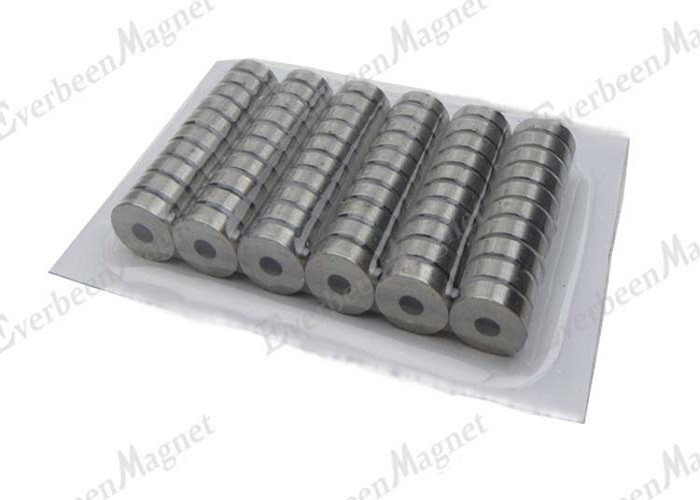
In addition to rod magnets, ring - shaped magnets are also popular in various applications. Our Smco Ring Magnet products offer similar superior magnetic properties as our SmCo rod magnets. They can be used in applications where a circular magnetic field is required, such as in some types of motors and sensors.
Conclusion
In conclusion, SmCo rod magnets and ferrite rod magnets each have their own unique advantages and disadvantages. Ferrite rod magnets are cost - effective and easy to machine, making them suitable for common and budget - sensitive applications. However, SmCo rod magnets shine in high - performance applications where strong magnetic fields, high temperature stability, and excellent coercivity are required.
If you're in the process of selecting magnets for your project, it's important to carefully evaluate your specific requirements, including magnetic strength, temperature tolerance, cost, and size constraints. Whether you need a large - scale supply of SmCo rod magnets for a high - tech project or are just starting to explore your options, I'm here to help. Feel free to reach out and start a procurement discussion to find the best magnet solution for your needs.
References
- Campbell, J.E. Magnetic Materials and Their Applications. Cambridge University Press, 1994.
- Skomski, R., and Coey, J.M.D. Permanent Magnetism. Institute of Physics Publishing, 1999.