

How to optimize the energy product of Sm2Co17 magnet?
Dec 09, 2025
As a supplier of Sm2Co17 magnets, I've witnessed firsthand the growing demand for these high - performance magnets in various industries. The energy product of a magnet is a crucial parameter that reflects its magnetic performance, representing the maximum energy that can be stored in the magnetic field per unit volume. Optimizing the energy product of Sm2Co17 magnets can significantly enhance their functionality and competitiveness in the market. In this blog, I'll share some key strategies based on my experience and industry knowledge.
Understanding the Basics of Sm2Co17 Magnets
Sm2Co17 magnets belong to the rare - earth magnet family, known for their excellent magnetic properties, high Curie temperature, and good corrosion resistance. The energy product of a magnet is determined by both the remanence (Br) and the coercivity (Hc). Remanence is the magnetic field remaining in the magnet after it has been magnetized, while coercivity is the ability of the magnet to resist demagnetization.
The theoretical maximum energy product of Sm2Co17 magnets is quite high, but achieving this value in practical applications requires careful control of various factors during the manufacturing process.
Raw Material Selection
The quality of raw materials is the foundation for optimizing the energy product. For Sm2Co17 magnets, the purity of samarium (Sm) and cobalt (Co) is of utmost importance. High - purity raw materials reduce impurities that can act as magnetic domain pinning sites or cause magnetic inhomogeneities.

When sourcing samarium and cobalt, we always look for suppliers with a proven track record of providing high - quality materials. Additionally, the ratio of Sm to Co and the content of other alloying elements such as iron (Fe), copper (Cu), and zirconium (Zr) need to be precisely controlled. These elements play important roles in enhancing the magnetic properties. For example, iron can increase the saturation magnetization, while copper and zirconium contribute to the formation of a fine - grained microstructure, which is beneficial for coercivity.
Manufacturing Process Optimization
Powder Metallurgy Process
The powder metallurgy process is the most common method for manufacturing Sm2Co17 magnets. It involves several key steps, each of which can impact the energy product.
- Powder Preparation: The starting materials are melted and then atomized into fine powders. The particle size and size distribution of the powders are critical. Fine powders with a narrow size distribution can lead to a more homogeneous microstructure in the final magnet. We use advanced atomization techniques to ensure the production of high - quality powders. For example, gas atomization can produce spherical powders with a controlled size, which are more conducive to compaction and sintering.
- Compaction: During compaction, the powders are pressed into the desired shape under a high magnetic field. This aligns the magnetic domains of the powder particles, which is essential for achieving a high remanence. The compaction pressure and the strength of the magnetic field need to be optimized. Insufficient pressure may result in low density, while excessive pressure can cause powder deformation and reduce the magnetic alignment.
- Sintering: Sintering is a heat - treatment process that fuses the powder particles together. The sintering temperature and time are carefully selected. A proper sintering temperature can promote the densification of the magnet while maintaining the desired microstructure. If the temperature is too low, the magnet may not reach full density, leading to a lower energy product. On the other hand, if the temperature is too high, it can cause grain growth and a decrease in coercivity.
Heat Treatment
After sintering, heat treatment is carried out to further improve the magnetic properties. This typically involves a solution treatment followed by an aging treatment.
- Solution Treatment: The sintered magnet is heated to a high temperature to dissolve the secondary phases and form a homogeneous solid solution. This step helps to eliminate internal stresses and prepare the magnet for the subsequent aging treatment.
- Aging Treatment: During aging, the magnet is held at a lower temperature for a specific period. This allows the precipitation of fine - scale secondary phases, which can pin the magnetic domain walls and increase the coercivity. The aging temperature and time are optimized based on the specific composition of the magnet.
Microstructure Control
The microstructure of Sm2Co17 magnets has a profound influence on their magnetic properties. A fine - grained, homogeneous microstructure with well - aligned magnetic domains is desirable for a high energy product.
- Grain Size: As mentioned earlier, a fine - grained microstructure can enhance coercivity. We use alloying elements and heat treatment processes to control the grain size. For example, zirconium can form fine precipitates that inhibit grain growth during sintering and heat treatment.
- Magnetic Domain Structure: Aligning the magnetic domains during the manufacturing process is crucial. A high degree of magnetic alignment can increase the remanence. We use strong magnetic fields during compaction and magnetization processes to ensure that the magnetic domains are oriented in the desired direction.
Testing and Quality Control
To ensure that the Sm2Co17 magnets meet the required energy product specifications, comprehensive testing and quality control measures are in place.
- Magnetic Property Testing: We use magnetometers to measure the remanence, coercivity, and energy product of the magnets. These measurements are taken at different stages of the manufacturing process to monitor the quality and make adjustments if necessary.
- Microstructure Analysis: Techniques such as scanning electron microscopy (SEM) and transmission electron microscopy (TEM) are used to analyze the microstructure of the magnets. This helps us to identify any defects or inhomogeneities that may affect the magnetic properties.
Application - Specific Optimization
Different applications have different requirements for the energy product of Sm2Co17 magnets. For example, in high - temperature applications, maintaining a high energy product at elevated temperatures is crucial. In such cases, we may adjust the alloy composition and heat treatment process to improve the thermal stability of the magnet.
In some applications where space is limited, such as in miniature motors, a high energy product per unit volume is required. We can optimize the shape and size of the magnet to maximize its performance within the given space constraints.
The Role of Our Sm2Co17 Magnets in the Market
Our Sm2Co17 magnets, with their optimized energy product, have found wide applications in various industries. They are used in aerospace, defense, electronics, and medical devices, among others.
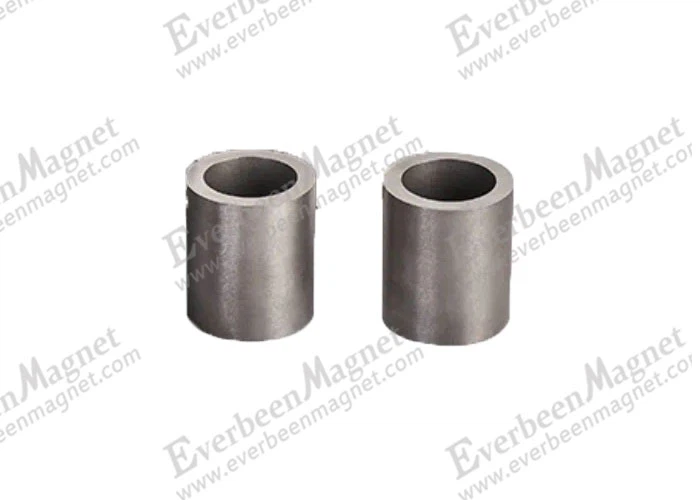
For those interested in our Smco Rod Magnets and Smco Ring Magnet, we offer a range of products with different sizes and magnetic properties to meet diverse customer needs.
If you are looking for high - performance Sm2Co17 magnets with an optimized energy product, we would be more than happy to discuss your requirements. Whether you need a small - scale prototype or a large - volume production order, our team of experts can provide customized solutions. Contact us today to start a procurement discussion and explore how our Sm2Co17 magnets can enhance your products.
References
- Buschow, K. H. J. (1998). Handbook of Magnetic Materials. Elsevier.
- Liu, J. F., & Yan, A. H. (2007). Rare - Earth Permanent Magnets: Principles and Applications. Springer.
- Kronmüller, H., & Fähler, S. (2003). Handbook of Magnetism and Advanced Magnetic Materials. Wiley.