


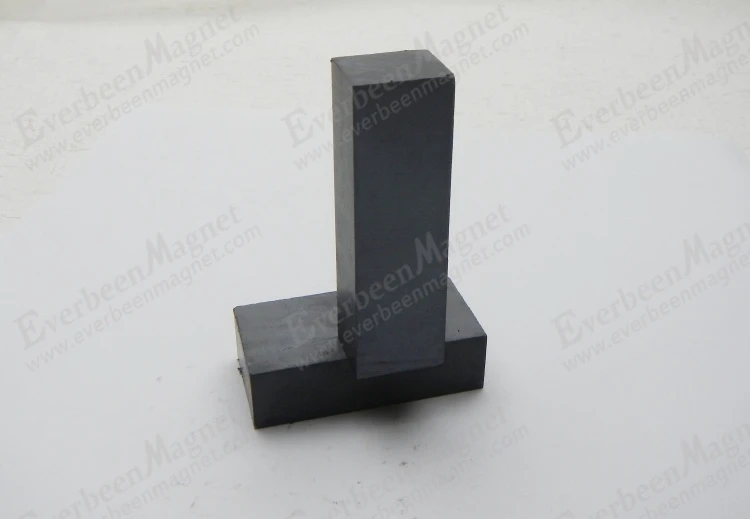


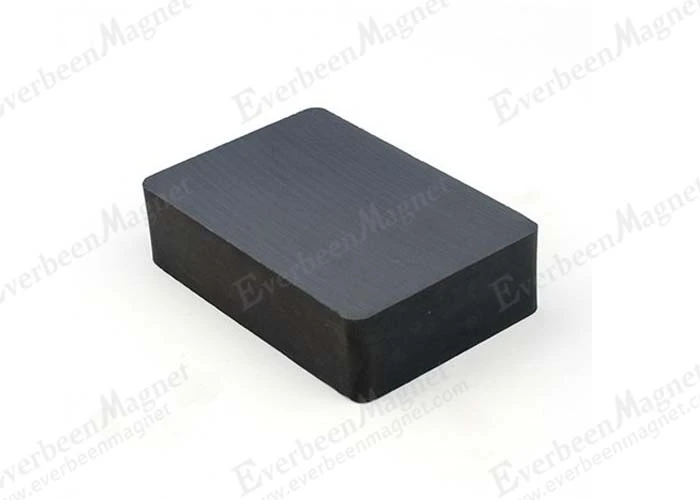
Rectangular Ceramic Magnets
This grade 8 ceramic block magnet measures 3.000” L x 2.000" W x 0.125" THK (76.2 mm L x 51 mm W x 3.2 mm THK) with an approximate pull force of 2.5 lbs (1 kg).
Composed of iron oxide & barium or strontium carbonate, ceramic block magnets exhibit relatively good holding strength.
Item YSFM-30 is axially magnetized through the thickness (THK).
The standard dimensional tolerance for this magnet is +/-0.015" on length, +/-0.010" on width & +/-0.005" on thickness.
Description:
Rectangular ceramic magnets are composed of iron oxide and strontium carbonate. Ceramic magnets exhibit relatively good holding strength for their price, making them a popular choice for many consumer, commercial and technical applications.
|
Item number |
YSFM-30 C8 k, |
|
Material |
SrO or BaO and Fe2O3 |
|
Minimum diatemer |
3mm, with dot or no mark |
|
Tolerance |
Thickness ± .005inch Others: ± 2% or ± .010inch |
|
Shape available |
Block, ring, round, segment and so on |
|
Purpose |
widely used in motors, cleaning machines, and medical equipment |
Rectangular ceramic magnets are a type of permanent magnet made from ceramic materials, typically composed of barium ferrite (BaFe₁₂O₁₉) or strontium ferrite (SrFe₁₂O₁₉). They are popular in a variety of applications due to their relatively low cost, good magnetic properties, and versatility. Decorate your fridge or any magnetic surface with this ceramic magnet. The glossy finish is ideal for sublimating photos or fun sayings. After printing, adhere the magnet to the back of the cooled magnet with the adhesive sticker.

Ferrites can be divided into two families based on their resistance to being demagnetized (magnetic coercivity).
"Hard" ferrites have high coercivity, so are difficult to demagnetize. They are used to make permanent magnets for applications such as refrigerator magnets, loudspeakers, and small electric motors.
"Soft" ferrites have low coercivity, so they easily change their magnetization and act as conductors of magnetic fields. They are used in the electronics industry to make efficient magnetic cores called ferrite cores for high-frequency inductors, transformers and antennas, and in various microwave components.

The production process
The production process of rectangular ceramic magnets, also known as ferrite magnets, involves several key steps:
Raw Material Preparation: Iron oxide and ceramic materials, such as barium carbonate (BaCO3) or strontium carbonate (SrCO3), are selected and finely ground to create a powdered mixture.
Mixing:
The powdered mixture is thoroughly mixed in precise proportions to achieve the desired magnetic properties.
Pressing:
The mixed powder is compacted into the desired magnet shape using molds and hydraulic presses. This process creates a "green" magnet with the intended rectangular shape.
Sintering:
The green magnets are subjected to high temperatures (typically around 1,200 to 1,300 degrees Celsius) in a kiln during the sintering process. This process fuses the particles and transforms the green magnet into a solid, crystalline structure.
Cooling:
The sintered magnets are slowly cooled to room temperature. This gradual cooling helps the magnet achieve its final magnetic properties.
Grinding (Optional):
In some cases, the magnets may undergo a grinding process to achieve precise dimensions and smooth surfaces.
Magnetization:
The magnets are subjected to a strong external magnetic field during the magnetization process. This aligns the magnetic domains within the material, giving the magnet its magnetic strength.
Coating (Optional):
Depending on the application and environmental conditions, the magnets may undergo coating processes to protect them from corrosion. Common coatings include nickel, zinc, or epoxy.
Quality Control:
The finished magnets undergo rigorous quality control measures to ensure they meet specific standards for magnetic strength, dimensions, and overall performance.
The entire production process is designed to create rectangular ceramic magnets with stable magnetic properties, durability, and cost-effectiveness. The versatility of rectangular ceramic magnets makes them suitable for a wide range of applications across different industries.


Rectangular ceramic magnet Key Characteristics:
Magnetic Properties: Ceramic magnets have moderate magnetic strength, which makes them ideal for many standard applications but not suited for high-performance needs like those requiring neodymium magnets.
Shape: Rectangular magnets are often used where space efficiency or specific geometrical fit is required. They are easy to handle and can be incorporated into devices and systems with minimal design alterations.
Corrosion Resistance: One of the key advantages of ceramic magnets is their inherent resistance to corrosion and oxidation, making them ideal for use in harsh environments or outdoors.
Low Cost: Compared to rare earth magnets, ceramic magnets are relatively inexpensive, making them an attractive choice for cost-sensitive applications.
Rectangular ferrite magnet Applications
Speakers: Ceramic magnets are commonly used in the construction of speakers and audio devices.
Motors: They are used in small electric motors for toys, home appliances, and other devices where high performance is not a critical requirement.
Sensors: Due to their stable magnetic field, they are also used in magnetic sensors, such as reed switches.
Magnetic Assemblies: They are often found in magnetic assemblies for industrial and consumer applications, such as in holding devices or magnetic separators.

FAQ:
1. How strong are rectangular ceramic magnets?
While not as powerful as rare-earth magnets like neodymium, rectangular ceramic magnets have sufficient strength for most applications requiring low to moderate magnetic force. Their maximum energy product typically ranges from 0.5 to 4 MGOe (Mega Gauss Oersteds).
2. Can rectangular ceramic magnets be cut or altered?
Cutting ceramic magnets is challenging due to their brittleness. It is not recommended to cut them after they have been manufactured, as this can lead to cracking or chipping. Special tools and techniques are required if modification is necessary.

Hot Tags: rectangular ceramic magnets, China rectangular ceramic magnets manufacturers, suppliers, factory, ceramic magnets in appliance, custom ceramic magnet, commercial ceramic magnets, long lasting magnetic effect ceramic magnets, modern ceramic magnet, ceramic magnetic


Send Inquiry
