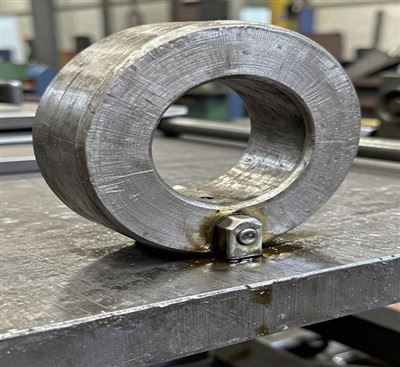
Magnetic Holding Magnets

Industrial Magnetic Holding Solutions: Engineering & Bulk Supply Specifications


Scope & Application: High-performance permanent magnetic assemblies engineered for zero-drill mechanical fixing, automated workpiece positioning, and heavy-duty industrial clamping. Built for OEM integration and high-volume global supply chains.


Core Material Performance & Engineering Specifications

Selecting the correct magnetic material determines the balance between holding force, thermal stability, corrosion resistance, and unit cost.


Material Type

Maximum Energy Product / Grade

Operating Temperature Limit

Primary Corrosion Characteristic

Best Suited Industrial Application

Neodymium (NdFeB)

N35 to N52 (33--55 MGOe)

80°C to 220°C (Grade dependent)

High iron content; prone to oxidation without protective plating.

High-payload automation fixtures, compact robotic end-effectors, heavy-duty mechanical clamping.

Ferrite (Ceramic)

Y30H, Y35

Up to 250°C

Inherently oxidation-resistant; passive surface layer eliminates treatment costs.

Outdoor switchboards, automated doors, baseline holding systems where unit cost efficiency is critical.

Alnico

Alnico 5, Alnico 8

Up to 500°C

Exceptionally stable in high-temperature oxidation environments.

High-temperature welding jigs, thermal treatment lines, foundry proximity fixtures.

Samarium Cobalt (SmCo)

SmCo5, SmCo2:17

Up to 350°C

Superior resistance to chemical breakdown and oxidation.

Aerospace instrumentation, high-precision marine sensors, chemical plant jigs.


Structural Design & Flux Concentration Principles

Bare permanent magnets disperse magnetic field lines inefficiently into surrounding air. To maximize shear and pull-off force within restricted mounting envelopes, our assemblies utilize specialized magnetic circuit engineering.

Steel Pot and Cup Assemblies
Engineering Mechanism: The permanent magnet is recessed inside a low-carbon steel shell (Q235 or 1010 steel). The steel housing acts as a magnetic yoke, redirecting and concentrating scattered magnetic flux lines toward a single working face.
Functional Advantage: This magnetic circuit concentration increases the breakaway (pull-off) force on flat ferromagnetic surfaces by up to 300% compared to an unshielded magnet of identical volume, while shielding the brittle core material from direct mechanical impact.


Standard Mounting Integrations
Internal / External Threads (Studs & Bosses): Direct, secure bolting to structural aluminum profiles or machine beds.
Countersunk Holes: Flush mounting with flat-head socket screws for interference-free workpiece passage.
Hooks and Loops: Rapid, non-permanent suspension of industrial cabling, pneumatic lines, or safety signage.


Protective Surface Treatments & Environmental Engineering

Because industrial environments expose components to cutting fluids, humidity, abrasive particles, and physical shock, long-term reliability depends on advanced surface engineering.


Nickel-Copper-Nickel (Ni-Cu-Ni): Electrolytically plated to a controlled thickness of 15--25 um. Provides baseline defense against mild workshop humidity and mechanical wear.


Epoxy Electrocoat: Deployed for environments requiring salt-spray resistance or chemical immersion.

Creates a continuous polymer barrier preventing moisture ingress to the underlying NdFeB substrate.


Injection-Molded Elastomer (Rubber Coating): Encapsulates the steel pot assembly in high-grade Santoprene or NBR rubber.


Shear Enhancement: Significantly increases lateral friction coefficients, preventing the magnet from slipping along vertical metallic surfaces under heavy asymmetrical loads.


Surface Preservation: Prevents scratching or marring on painted machine enclosures, polished stainless steel panels, and finished architectural glass.

productcate-600-550


Quality Control & Manufacturing Verification

To guarantee consistency across bulk manufacturing runs (ranging from 500 to 100,000+ units), production batches undergo strict, multi-stage verification protocols:

Incoming Material Analysis:

Spectrometric composition verification of raw rare-earth ingots and ferrite powders, paired with remanence (Br) and intrinsic coercivity (Hcj) flux checks.

01

Dimensional & Tolerance Inspection:

Laser micrometers and coordinate measuring machines (CMM) monitor outer diameters, thread pitches, and assembly depths to maintain tight ± 0.05 mm tolerances.

02

Pull-Force Verification:

Random sampling of finished batches on a calibrated tensile testing rig using standard 10 mm thick Q235 low-carbon steel plates to verify rated breakaway force.

03

Coating Integrity Checks:

Cross-hatch adhesion testing and salt-spray exposure testing (ASTM B117 standards) for assemblies destined for humid, marine, or corrosive industrial sectors.

04


OEM Customization & Global Supply Chain Support

We partner directly with equipment manufacturers, automation integrators, and global distributors to design and deliver holding solutions that match precise mechanical interfaces.


Custom Geometry & Magnetics:

Custom blocks, discs, rings, or complex countersunk channels engineered to fit tight proprietary housing dimensions.


Thermal Grade Matching:

Selection of specific temperature coefficients (such as SH, EH, or UH grades) to completely eliminate thermal demagnetization during high-heat operational cycles.


Traceability & Documentation:

Laser-etched batch codes, tailored bulk packaging, and Material Test Certificates (MTC) supplied with every freight shipment.


FAQ


Q: What are industrial magnetic holding magnets primarily used for?

A: They are engineered for mechanical fixing, positioning, clamping, and holding components without permanent drilling, tapping, or welding. They are widely implemented in factory automation, modular tooling, quick-change fixtures, and industrial displays.

Q: What is the strongest type of magnetic holding magnet?

A: Neodymium (NdFeB) holding magnets deliver the highest holding force-to-volume ratio because NdFeB possesses the highest magnetic energy density among all commercially available permanent materials.

Q: How do I select the correct holding magnet for my application?

A: Selection relies on evaluating key operational parameters:

  • Required holding force and safety margin
  • Total weight and center of gravity of the payload
  • Contact surface material condition (flatness, paint, thickness)
  • Operating temperature range
  • Available installation space and mounting style
  • Environmental exposure (moisture, chemicals, cutting fluids)

Q: Do permanent magnetic holding magnets lose strength over time?

A: High-quality permanent magnets exhibit exceptional long-term stability. Under normal operating temperatures and protected from severe mechanical shock or external opposing magnetic fields, performance degradation is negligible over decades of service.

Q: Can you handle custom OEM designs and large-scale bulk orders?

A: Yes. We support full custom engineering (dimensions, grades, coatings, mounting hardware) backed by scalable manufacturing lines capable of handling pilot runs to massive global volume shipments with strict quality guarantees.

As one of the most professional magnetic holding magnets manufacturers and suppliers in China, we're featured by quality products and good service. Please rest assured to buy customized magnetic holding magnets at competitive price from our factory.

(0/10)

clearall