


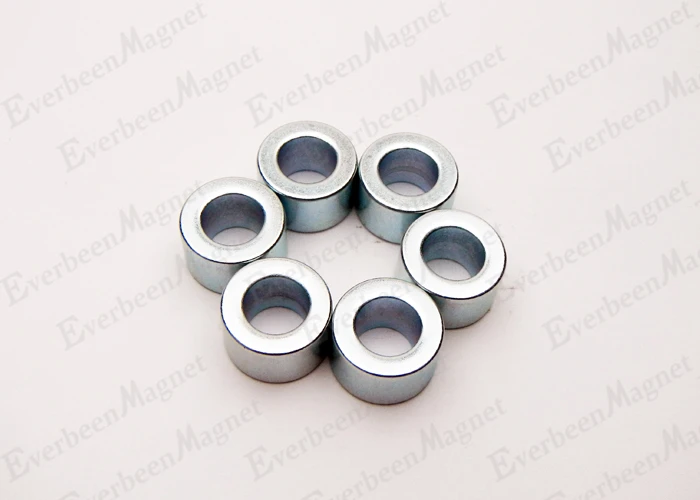

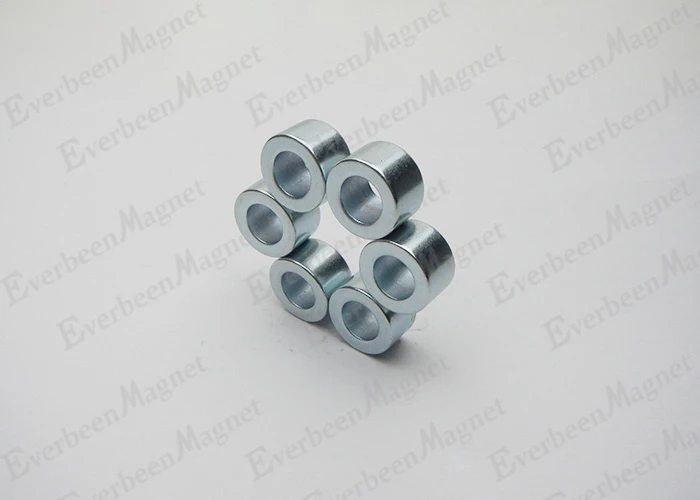
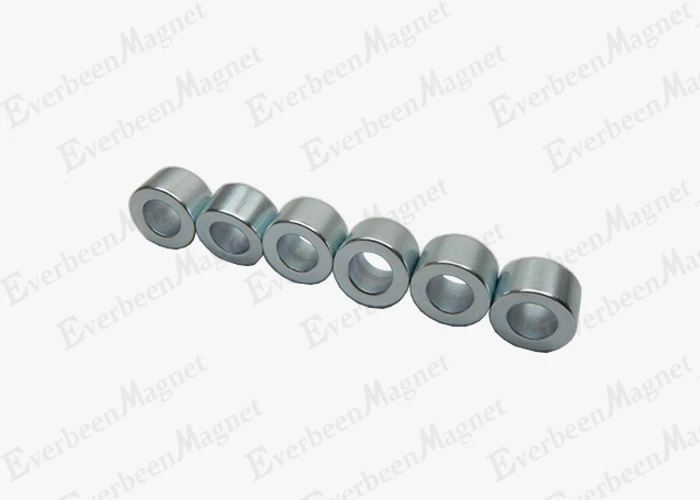
NdFeB Ring Magnet
NdFeB (Neodymium Iron Boron) ring magnets are among the most powerful permanent magnets available today, ,
offering excellent magnetic strength in a compact form. When combined with specific features such as,
zinc plating and diametric magnetization, these magnets become invaluable components in a variety of sensor applications. This article will explore the benefits and uses of NdFeB ring magnets, plating zinc, ,
and diametric magnetization in sensor technology.
NdFeB Ring Magnets, Plating Zinc with Diametrically Magnetized: Essential for Sensor Applications
NdFeB (Neodymium Iron Boron) ring magnets are among the most powerful permanent magnets available today, offering excellent magnetic strength in a compact form. When combined with specific features such as zinc plating and diametric magnetization, these magnets become invaluable components in a variety of sensor applications. This article will explore the benefits and uses of NdFeB ring magnets, plating zinc, and diametric magnetization in sensor technology
What Are NdFeB Ring Magnets
NdFeB magnets, composed of neodymium, iron, and boron, are renowned for their high magnetic energy, making them the go-to choice for demanding applications. Ring-shaped magnets are particularly useful because their geometry allows for efficient magnetic field distribution and easy integration into various devices. NdFeB ring magnets are often used in motors, actuators, and sensors, where strong magnetic fields are required in a small, manageable space.
Zinc Plating for Durability and Corrosion Resistance
One of the most significant drawbacks of NdFeB magnets is their susceptibility to corrosion. Due to their high iron content, exposure to moisture or harsh environments can cause these magnets to degrade over time. To mitigate this, NdFeB magnets are often coated with a protective layer of zinc. Zinc plating offers a cost-effective solution to enhance the magnet's resistance to corrosion, making it more suitable for long-term use in challenging environments.
Zinc-coated NdFeB ring magnets are particularly useful in applications where the sensor components are exposed to moisture, high humidity, or even chemicals. The zinc layer acts as a protective barrier, ensuring that the magnet retains its strength and functionality over time, even in adverse conditions.
Diametric Magnetization: A Unique Advantage
Diametric magnetization refers to the orientation of the magnetic poles along the diameter of the ring magnet. Instead of the traditional axial magnetization, where the poles are located at the top and bottom of the magnet, diametric magnetization aligns the poles along the side of the magnet, creating a unique magnetic field pattern.
This specific magnetization is particularly useful in sensor applications that require a stable and uniform magnetic field. In sensors, the precise positioning and orientation of the magnetic field are crucial for accurate detection and measurement. Diametrically magnetized NdFeB ring magnets provide a reliable, consistent magnetic field that improves the performance of sensors, whether in proximity sensors, linear position sensors, or rotary encoders.

Performance Details of Ring NdFeB Magnets
|
Grade |
Br mt(KG) |
Hcb Koe(KA/m) |
iHc Koe(KA/m) |
(BH)max KJ/m3 (MGOe) |
TW℃ |
|
N35 |
1170-1210(11.7-12.1) |
≧10.8(≧860) |
≧12(≧955) |
263-287(33-36) |
80 |
|
N38 |
1210-1250(12.1-12.5) |
≧10.8(≧860) |
≧12(≧955) |
287-310(36-39) |
80 |
|
N40 |
1250-1280(12.5-12.8) |
≧11.6(≧923) |
≧12(≧955) |
302-326(38-41) |
80 |
|
N42 |
1280-1320(12.8-13.2) |
≧11.6(≧923) |
≧12(≧955) |
318-342(40-43) |
80 |
|
N45 |
1320-1380(13.2-13.8) |
≧11.0(≧876) |
≧12(≧955) |
342-366(43-46) |
80 |
|
N48 |
1380-1420(13.8-14.2) |
≧10.5(≧835) |
≧12(≧955) |
366-390(46-49) |
80 |
|
N50 |
1380-1450(13.8-14.5) |
≧10.5(≧835) |
≧12(≧955) |
474-406(47-51) |
80 |
Quality Assurance
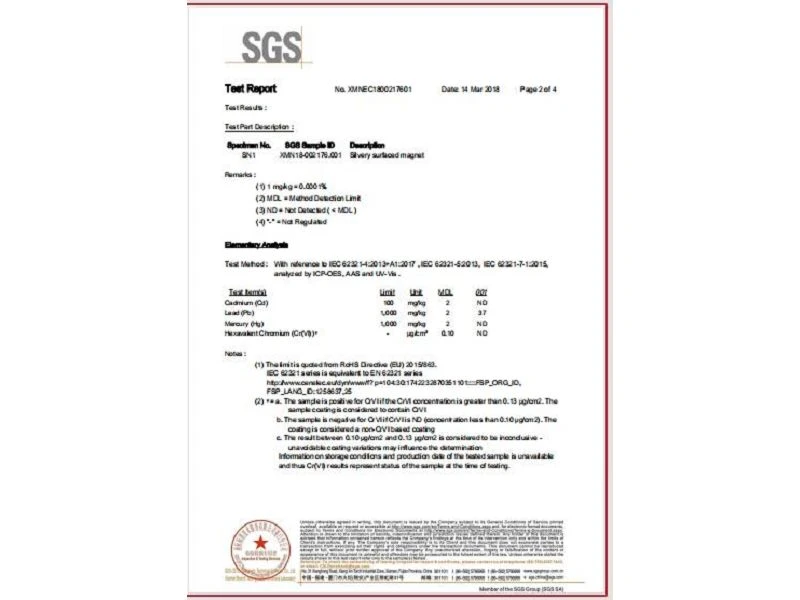
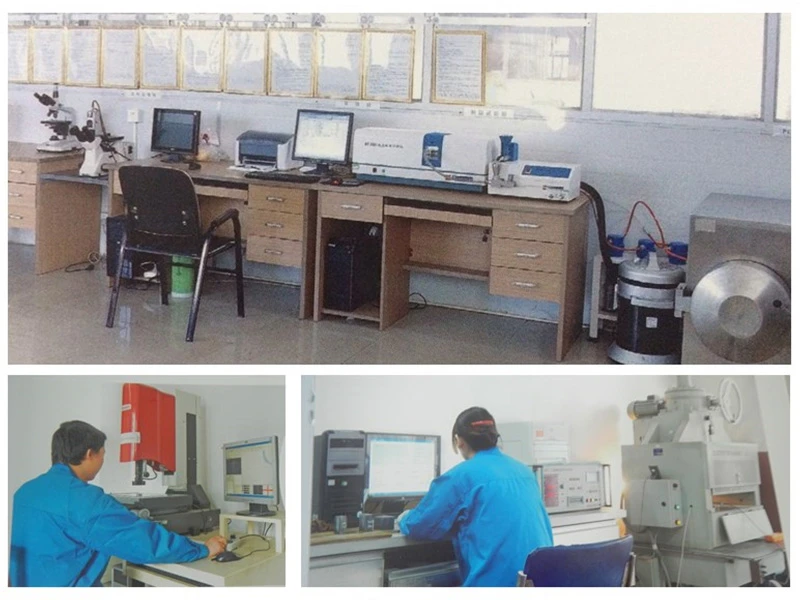
Custom Various NdFeB N35 to N52 NdFeB magnets


Sensor Applications of NdFeB Ring Magnets
1. Proximity Sensors
Proximity sensors detect the presence or absence of an object within a certain range without physical contact. Diametrically magnetized NdFeB ring magnets are commonly used in these sensors, as their strong magnetic field can trigger the sensor when it comes into close proximity to a ferromagnetic object. The ring shape allows for a broad detection area, making it ideal for industrial automation, robotics, and other applications where precise positioning is critical.
2. Rotary Encoders
Rotary encoders are used to measure the rotation of a shaft or axle, converting rotational position into an electrical signal. NdFeB ring magnets, with their strong and stable magnetic field, are often incorporated into these devices. Diametric magnetization ensures that the encoder detects the magnet's position accurately as it rotates, providing real-time feedback in applications like motors, robotics, and automotive systems.
3. Linear Position Sensors
Linear position sensors detect the movement of an object along a straight path. When diametrically magnetized NdFeB ring magnets are used in combination with Hall-effect sensors or other magnetic field sensors, they provide precise positional data. The magnet's consistent magnetic field allows for accurate measurements in applications such as CNC machines, conveyor belts, and industrial equipment.
Conclusion
NdFeB ring magnets, plated with zinc and diametrically magnetized, are indispensable in modern sensor technology. Their strong magnetic properties, combined with corrosion resistance and a unique magnetic field orientation, make them the ideal choice for applications in proximity sensors, rotary encoders, and linear position sensors. As industries continue to demand more reliable and precise sensor solutions, NdFeB ring magnets will play a crucial role in advancing these technologies. Whether in industrial, automotive, or automation sectors, these magnets offer a robust solution for a wide range of sensor needs.
Operation Instructions
NdFeB magnets have the character of hardness and brittleness. After the magnetization, Its magnetic attraction is big as 60times as the its own weight. So the Neodymium magnet must be picked up carefully and gently during assemble process and kept away from iron ware to avoid mutually attracting, causing chips and cracks or other damage to the magnet. For the bigger size, the personal safety and self-protection are more important. it'll hurt operators in case that two strongly magnetized slices firmly attract unexpectedly. You can use machine equipments just like bolt or stick craft to assembly and fasten them.
Hot Tags: ndfeb ring magnet, China ndfeb ring magnet manufacturers, suppliers, factory, Custom Neodymium Magnet Manufacturing Services, Low Temperature Coefficient SmCo Magnets


Send Inquiry
